
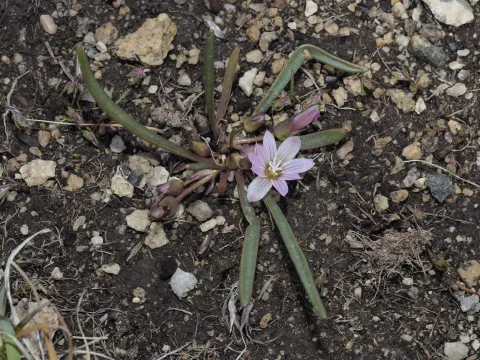
Pygmy lewisia
Lewisia pygmaea
Seeds of Lewisia pygmaea require a period of cold stratification to break dormancy. Sowing should be done in late winter, placing containers in a cool environment or a refrigerator for several weeks.
What the section contains
Pygmy lewisia
Sow seeds on the surface of a fast-draining, grit-based soil mix. Do not cover the seeds heavily, as they need a small amount of light to trigger germination.
Germination is often slow and erratic. Maintaining a cool, stable temperature and consistent moisture is crucial during the early stages of development.
Once seedlings have developed two sets of true leaves, transplant them into small, individual pots. Use containers with plenty of drainage holes to protect the fragile roots.
Avoid excessive disturbance of the root system during final planting in the rock garden. Acclimate the young plants gradually to outdoor conditions before transplanting.
Pygmy lewisia is a member of the Montiaceae family, native to subalpine and alpine regions of western North America, where it thrives in rocky soils.
The plant demands extremely well-draining soil, typically a mix of gravel, sand, and a small portion of organic matter. Poor drainage is the most frequent cause of failure.
Bright, filtered light is ideal. While they enjoy mountain sun, they appreciate protection from the intense heat of midday during the peak summer months.
Watering must be done with extreme care. Allow the growing medium to dry out almost completely between waterings to prevent root and crown rot.
Winter dormancy requires protection from wet conditions. In damp climates, a protective cover or a sheet of glass over the plant can help shed excess precipitation.
Root rot caused by Phytophthora or other water-borne pathogens is the primary threat to the health and longevity of Pygmy lewisia.
Fungal leaf spots can occur if humidity remains high for prolonged periods. Ensuring proper air circulation around the rosette is a vital preventive measure.
Slugs and snails are the most common pests, as they are attracted to the succulent, fleshy leaves of the plant. Barriers like copper tape or sharp gravel are effective.
Aphids can occasionally infest the flower stalks during the spring blooming phase, necessitating a gentle spray of horticultural soap or manual removal.
Proper plant hygiene, including the removal of dead leaves at the base, helps maintain airflow and reduces the risk of pest infestations and rot.