
Monanthochloe
Monanthochloe
Monanthochloe is a genus of perennial grasses belonging to the Poaceae family. This culture is recognized as a specialized halophyte, capable of thriving in highly saline environments where standard crops would fail due to osmotic stress and toxicity.
What the section contains
Monanthochloe
The native distribution of this species spans the coastal regions of the Americas, primarily inhabiting salt marshes and tidal flats. It is uniquely adapted to thrive in areas that undergo frequent inundation by seawater and harbor high soil salt concentrations.
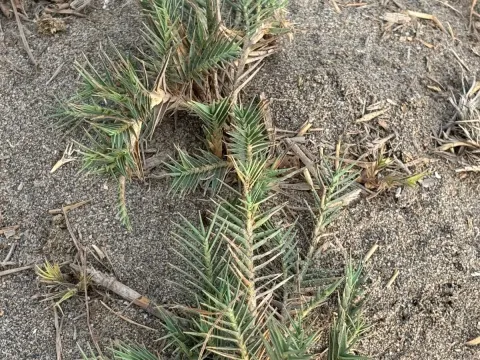
The botanical structure of Monanthochloe features dense, creeping rhizomes that allow it to form expansive mats. Its narrow, rigid leaves are structurally optimized for water conservation in saline environments, demonstrating evolutionary mastery over extreme ecological conditions.
Regarding cultivation requirements, this grass demands high light intensity and specific soil salinity levels. It is not suitable for freshwater agriculture; its growth potential is maximized in regions experiencing secondary soil salinity or coastal erosion issues where other flora cannot survive.
The agricultural and environmental utility of Monanthochloe is focused on land stabilization and bio-remediation. It serves as an effective ground cover in saline-prone ecosystems and contributes to coastal defense by binding loose sediments with its resilient underground network.