
Claytonia parviflora
Claytonia parviflora
Description
Sowing dates
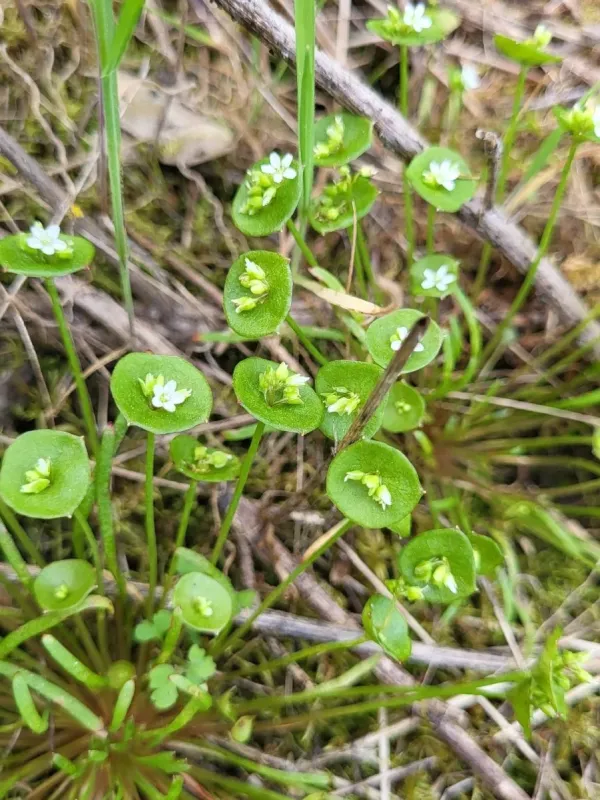
Claytonia parviflora, often referred to as a form of miner's lettuce, is an annual plant belonging to the Montiaceae family. It is a highly valued cool-season crop known for its succulent, edible leaves.
Sowing typically begins in early spring, as soon as the soil can be worked, or in autumn in regions with mild winters. The seeds require cool soil temperatures to germinate successfully.
Seeds should be sown in rows, spaced approximately 20 cm apart. A shallow sowing depth of about 0.5 to 1 cm is sufficient to ensure proper germination and uniform sprout development.
The plant thrives in partial shade, especially when cultivated during the warmer spring days, which helps delay bolting and keeps the leaves tender for a longer period.
Successive sowings every two to three weeks are recommended to maintain a continuous supply of fresh harvest throughout the growing season.
Growing requirements
The crop performs best in temperate climates with temperatures ranging between 10 and 18 degrees Celsius. Excessive heat triggers early flowering, which halts the production of marketable leaves.
Soil requirements are relatively modest; however, well-draining, moisture-retentive loamy soil rich in organic matter provides the optimal environment for vigorous growth.
Consistent irrigation is critical for this species. Even minor drought stress can cause the leaves to become fibrous and develop a bitter aftertaste, significantly reducing quality.
Weed management is vital during the early establishment phase. Manual weeding or light mulching helps prevent competition for nutrients and water in the small seedbeds.
Fertilization should be handled with care. Light applications of well-rotted compost are superior to chemical fertilizers, which may lead to excessive salt accumulation in the leaves.
Yield
Yield potential is excellent when high-density planting techniques are used. Proper spacing and consistent care allow for multiple harvests from a single crop stand.
Harvesting usually commences 40–50 days after sowing. The entire plant can be cut just above the root crown, or individual leaves can be picked, allowing the plant to regrow.
Efficient post-harvest handling is necessary to maintain quality. The greens should be rinsed, cooled immediately to 2-4 degrees Celsius, and stored in high-humidity conditions.
Productivity per square meter varies based on environmental factors, but intensive cultivation can yield approximately 2 kg of fresh, high-quality greens per harvest cycle.
Given its delicate nature, the harvested crop is best intended for local markets or direct-to-consumer sales to ensure the freshness reaches the end user in optimal condition.
Main diseases and pests
Slugs and snails are the most significant pests for this crop, as they are attracted to the succulent, moisture-rich leaves of the plant, particularly in humid or shaded growing environments.
Root rot and damping-off can occur if the soil remains waterlogged or if air circulation between rows is inadequate, necessitating proper bed preparation and drainage management.
Aphids might colonize the plants during warmer spells, damaging the foliage and reducing marketability. Early detection and the use of physical barriers can help mitigate these attacks.
Integrated pest management, including regular crop monitoring and the removal of plant debris, is essential for maintaining a healthy and productive plot throughout the season.
In cases of severe infestation, the use of approved organic pesticides or biological controls is recommended, though maintaining good cultural practices remains the primary line of defense.