
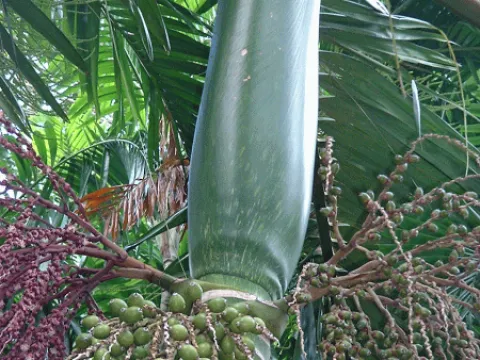
Montgomery Palm
Veitchia montgomeryana
The Montgomery Palm (Veitchia montgomeryana) is a stunning member of the Arecaceae family, native to the islands of Vanuatu. It is highly prized by landscape designers for its fast growth rate and elegant, slender appearance.
What the section contains
Montgomery Palm
This species thrives in tropical climates, requiring consistent warmth and protection from frost. It is best suited for zones where temperatures remain above 10°C, as cold exposure can cause significant physiological stress.
Well-drained soil is non-negotiable for this palm. It performs best in nutrient-rich, organic-heavy substrates that retain moisture without becoming waterlogged. Consistent watering is required during the dry season to maintain vigor.
Exposure to full sun is ideal for mature specimens, while younger palms may benefit from light shade to protect delicate fronds. Wind protection is essential to prevent mechanical damage to the large, arching leaves.
Regular fertilization with a balanced, slow-release palm fertilizer helps sustain growth and prevent nutritional deficiencies such as yellowing fronds. Consistent soil moisture and a stable environment promote rapid canopy development.
Fungal diseases represent a significant threat, particularly in regions with high rainfall and poor drainage. Root rot and leaf spot pathogens can compromise the palm's structural integrity if left untreated.
Insect pests such as spider mites and mealybugs frequently infest the fronds, especially in dry, stagnant air. These pests damage the foliage, causing discoloration and stunting the palm's growth.
Scale insects are another common concern, often attaching themselves to the stems and leaf bases. Their feeding habits can lead to secondary infections and the development of sooty mold.
Effective management strategies include the application of horticultural oils or specialized insecticides. Maintaining good airflow within the canopy significantly reduces the risk of pest colonization.
Integrated pest management protocols, including regular visual inspection and the removal of severely affected leaves, are critical to preserving the health and aesthetic value of the Montgomery Palm.