
Curarea candicans
Curarea candicans
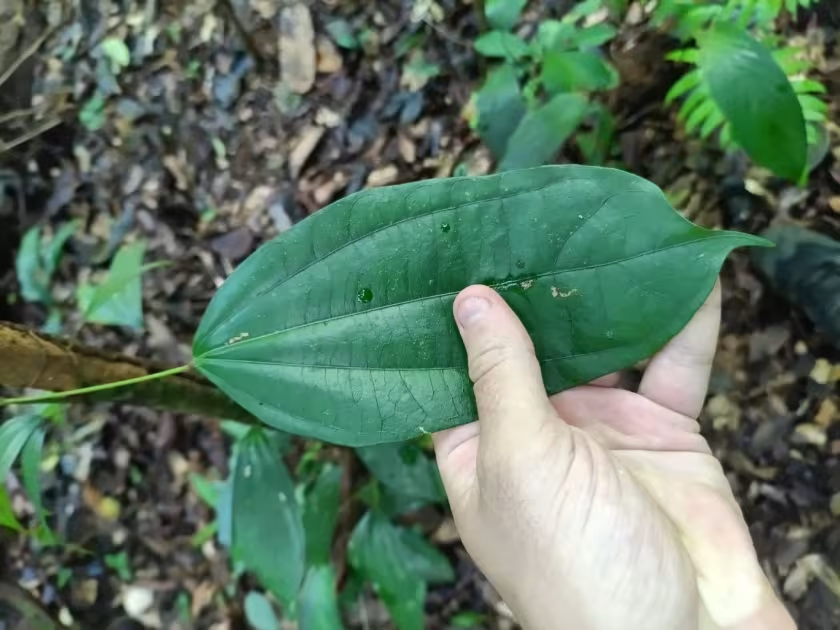
Description
Growing requirements
Curarea candicans is a woody liana species belonging to the family Menispermaceae. It is native to the tropical rainforests of South America, primarily distributed within the Amazon basin where it grows as part of the dense canopy ecosystem.
The botanical structure of this plant features a robust, climbing woody stem and simple, alternate leaves. A distinguishing morphological trait is the dense white or silvery pubescence on the underside of the leaves, which gives the species its specific epithet.
The environmental requirements for this plant are strictly tropical. It demands a high-humidity climate with minimal seasonal temperature fluctuations, thriving best in temperatures ranging between 22°C and 30°C throughout the year.
Soil requirements involve well-draining, nutrient-rich substrates that mimic the leaf-litter-covered forest floor. The plant is highly sensitive to waterlogging and requires a consistent moisture supply without the risk of stagnant water around its roots.
The cultural and economic relevance of Curarea candicans is rooted in ethnobotany. Indigenous tribes have historically utilized the extracts from the bark and roots as key ingredients in the preparation of curare, a traditional poison used for hunting.