
Tibouchina urvilleana
Tibouchina urvilleana (DC.) Cogn.
Description
Growing requirements
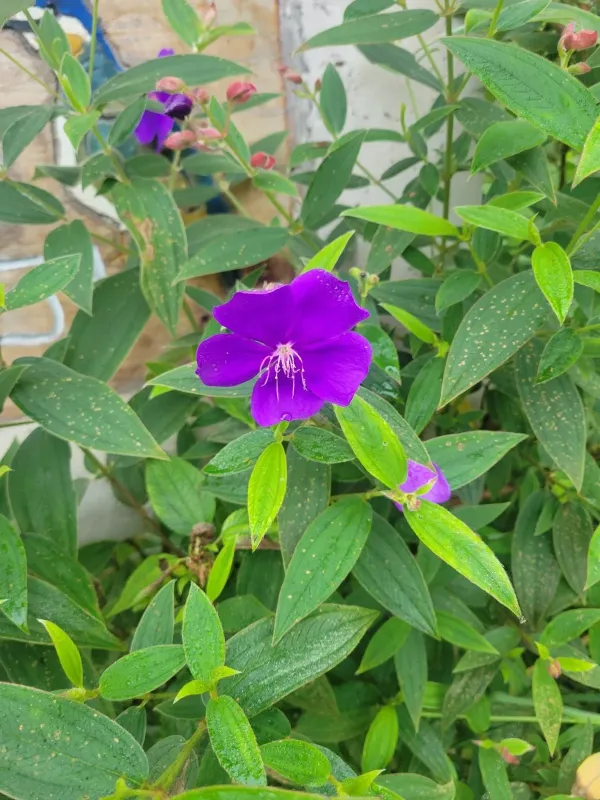
Tibouchina urvilleana, commonly known as the princess flower, is a robust evergreen shrub belonging to the Melastomataceae family. Originating from the tropical rainforests of Brazil, this plant is highly valued for its intense violet-purple flowers and distinctively fuzzy, ribbed foliage that adds texture to any landscape.
The cultivation of this species requires specific tropical conditions with consistent temperatures ideally ranging between 18°C and 25°C. In temperate climates, Tibouchina must be grown in containers, allowing for indoor overwintering as it cannot tolerate freezing temperatures, which can lead to significant tissue damage or death.
Optimal growth is achieved in well-draining, slightly acidic soil that is rich in organic matter. Gardeners should ensure that the potting mix or garden soil provides adequate aeration, as the root system of this plant is prone to rotting if subjected to prolonged periods of waterlogging or poor drainage.
Light requirements for the princess flower include bright, indirect sunlight throughout the day. While the plant loves light, harsh afternoon sun can sometimes cause foliage chlorosis or leaf scorch, particularly if the humidity levels are not sufficient to support the transpiration rate of the broad leaves.
A fundamental part of the plant's maintenance is systematic pruning, which is typically performed after the main flowering season. This practice not only keeps the plant at a manageable size but also encourages the development of new flowering stems for the subsequent season, ensuring a showy and lush appearance.
Main diseases and pests
Common pests associated with Tibouchina urvilleana include spider mites and mealybugs, which thrive in indoor environments where air circulation is restricted and humidity is low. Integrated pest management, including regular misting and the application of neem oil or insecticidal soap, is essential for control.
Fungal diseases, such as leaf spot or root rot, are often triggered by excessive moisture and poor drainage systems. To mitigate these risks, it is important to follow a strict watering schedule, ensuring that the top layer of soil dries out slightly before re-watering, and maintaining a hygienic growing environment.