
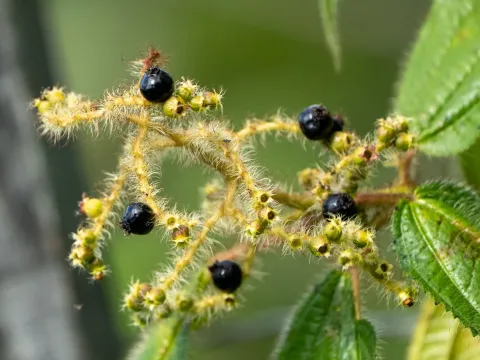
Tococa
Tococa
Tococa is a genus of evergreen shrubs belonging to the Melastomataceae family. These plants are native to the humid tropical rainforests of Central and South America, where they have adapted to the understory conditions of dense forests.
What the section contains


Tococa
A distinctive botanical feature of the genus is the presence of domatia—specialized swollen structures on the leaf petioles. These cavities often house ant colonies that engage in symbiotic relationships with the plant, providing protection against herbivores and competitors.
Successful growth of the crop requires consistently high air temperatures, with no tolerance for frost. Tococa favors high relative humidity levels typical of tropical climates and struggles in the dry air of indoor environments.
The plant has specific substrate requirements: the soil must be loose, rich in organic matter, and possess excellent drainage properties. Maintaining an acidic or slightly acidic soil pH is essential for optimal nutrient uptake.
In terms of agricultural or horticultural use, Tococa is primarily considered a botanical specimen or a decorative plant for specialized greenhouses. Due to the challenges of introduction, industrial cultivation in open fields outside the tropical zone is largely impossible.
In indoor or greenhouse conditions, Tococa is susceptible to common tropical plant pests. Spider mites and mealybugs represent the primary threats, as they proliferate rapidly when temperature and humidity parameters are not strictly maintained.
Fungal diseases, including powdery mildew or root rots, occur due to water stagnation in the soil or insufficient air circulation. Prevention relies on consistent ventilation and strict control over watering intervals.
The plant is highly sensitive to the quality of irrigation water; using water with high mineral content can induce leaf chlorosis. It is recommended to use soft, settled water at room temperature for all irrigation needs.
Insufficient lighting or a deficiency in essential nutrients leads to reduced aesthetic value and premature leaf drop. Timely application of balanced mineral fertilizers during the active growing season is a mandatory practice.
Specific entomological threats are naturally mitigated by ant symbionts in the wild. Under controlled cultivation, the plant's natural biological defense is reduced, necessitating close monitoring of the foliage to ensure health.