
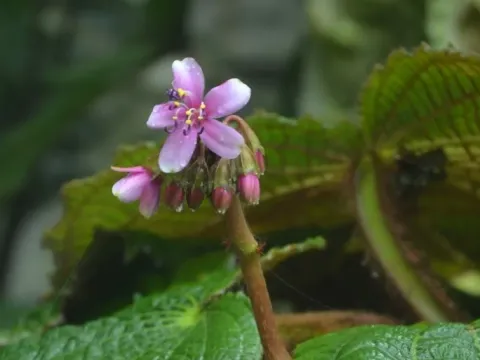
Tigridiopalma
Tigridiopalma
Tigridiopalma is a monotypic genus of flowering plants belonging to the Gesneriaceae family. The genus consists of a single species, Tigridiopalma magnifica, which is an endemic plant native to specific regions of Southern China, often found in isolated rocky environments.
What the section contains

Tigridiopalma
The culture has strict environmental requirements, thriving in humid and shaded conditions. In its natural habitat, it grows on rocky slopes and within damp gorges, where high atmospheric humidity remains constant throughout the entire vegetative period.
For successful cultivation, it is essential to maintain a stable temperature range without sudden fluctuations. The growing medium must be loose, well-drained, and rich in organic matter, effectively mimicking the natural forest soil to which the plant is evolutionarily adapted.
Lighting is a critical factor, as the species is highly sensitive to direct sunlight, which can scorch its leaves. Providing bright, diffused light is the optimal strategy to ensure healthy photosynthesis while protecting the integrity of the foliage.
The economic use of Tigridiopalma is primarily limited to botanical collections and specialized exotic plant horticulture. Due to its rarity and demanding nature, it is not currently grown as a large-scale agricultural crop, remaining a niche interest for enthusiasts.
Fungal infections are the most significant threat to this plant, often caused by waterlogging in the root zone or poor air circulation. Prolonged moisture in cool environments frequently leads to the rapid development of root and crown rot.
Spider mites are the most common pests, particularly prevalent when the ambient air humidity drops below required levels. Regular monitoring of the foliage undersides is necessary to catch and treat infestations before they cause irreversible damage.
Mechanical damage to the leaves significantly reduces the plant's aesthetic appeal and health. Any minor laceration on the leaf surface can serve as an entry point for opportunistic pathogens, leading to secondary bacterial decay.
Improper fertilization, especially an excess of mineral salts, can lead to root system degradation. It is strongly recommended to use diluted, low-concentration fertilizers specifically formulated for Gesneriaceae to prevent nutrient toxicity.
Constant observation of the substrate structure is vital for the long-term survival of the species. If signs of wilting appear, the irrigation schedule must be reviewed immediately to improve aeration and prevent further stress on the roots.