
Tibouchina granulosa
Tibouchina granulosa (Desr.) Cogn.
Description
Growing requirements
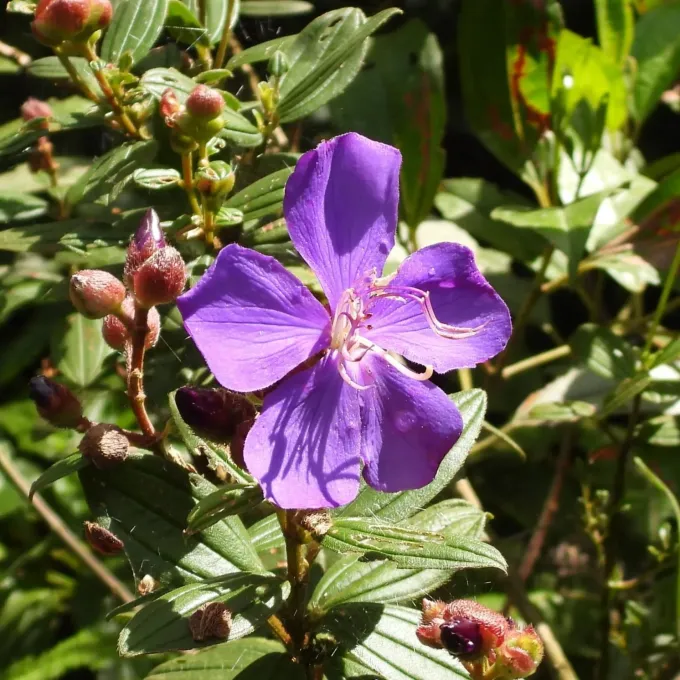
Tibouchina granulosa is a stunning ornamental shrub or small tree belonging to the Melastomataceae family. Native to Brazil, this species is widely admired for its deep purple, velvety flowers that cover the canopy during the blooming season.
The plant thrives in warm, tropical climates and requires a frost-free environment to flourish. It is highly sensitive to cold temperatures, making it unsuitable for outdoor cultivation in temperate regions without protection.
Successful cultivation requires acidic, well-draining soil rich in organic matter. Tibouchina granulosa prefers a consistent moisture level but is extremely intolerant of waterlogged conditions, which can lead to rapid root decay.
Regarding light, it demands bright, indirect sunlight to reach its full potential. Exposure to direct morning sun is beneficial, but the plant may require protection from the harsh, scorching afternoon sun in extremely hot climates.
Agricultural management involves regular pruning to maintain a desirable shape and encourage dense foliage. Pruning should be performed immediately after the flowering cycle ends to ensure the next season's growth is productive.
Main diseases and pests
Fungal diseases are the primary threat to the plant's health, often caused by inadequate aeration and excessive moisture. Root rot is a common issue that occurs when drainage systems fail to function correctly.
Common pests include spider mites, mealybugs, and scale insects. These pests are particularly active during dry seasons or when the plant is kept in poor environmental conditions that weaken its natural defenses.
- Monitor leaf undersides for early signs of infestation.
- Use systemic insecticides when necessary for control.
- Ensure adequate spacing between plants to prevent spread.
Nutrient deficiencies, specifically iron chlorosis, can lead to yellowing leaves with green veins. Correcting soil pH and applying chelated micronutrients can alleviate this condition effectively.
Sanitation practices such as removing dead twigs and fallen debris help prevent the accumulation of fungal pathogens. Keeping the growing area clean is essential for long-term plant vigor.