
Tibouchina lepidota and mutabilis hybrids
Hybrids between Tibouchina lepidota and Tibouchina mutabilis
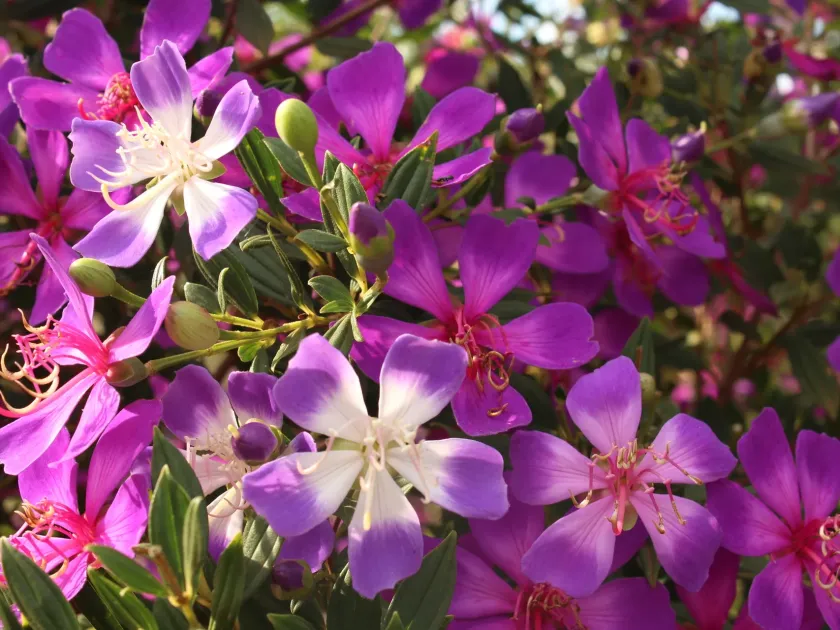
Description
Growing requirements
These hybrids belong to the family Melastomataceae and are prized for their spectacular display of purple to violet flowers. They are complex crosses derived from species native to the high-altitude tropical forests of South America, adapting specifically to stable, warm environments.
The cultivation of these hybrids requires high-quality, well-draining soil with a pH ranging from 5.5 to 6.5. A mix composed of peat, perlite, and organic compost is generally recommended to ensure proper aeration for the delicate root systems of the plant.
Climate requirements include constant temperatures between 18°C and 28°C. They are highly sensitive to frost; even mild exposure can cause significant physiological damage, making them suitable primarily for greenhouses or frost-free tropical gardens.
Adequate water management is essential; while the soil should remain moist, it must never become waterlogged. High humidity levels, ideally above 60%, promote lush foliage development and vibrant flower production throughout the blooming cycle.
General maintenance involves light pruning post-bloom to maintain the plant's structural integrity. Regular application of a balanced, micronutrient-enriched fertilizer during the active growing season is vital to prevent leaf chlorosis, which is a common issue in this family.
Main diseases and pests
The most common pests affecting these plants are spider mites, whiteflies, and scale insects. Maintaining high environmental humidity and ensuring proper airflow are the best cultural methods to prevent severe infestations and reduce the need for chemical intervention.
Fungal pathogens such as Pythium and various leaf spots are frequent threats, especially in poorly ventilated environments. Proper sanitation, including the prompt removal of fallen leaves and the sterilization of pruning tools, is essential to minimize the risk of disease transmission.