
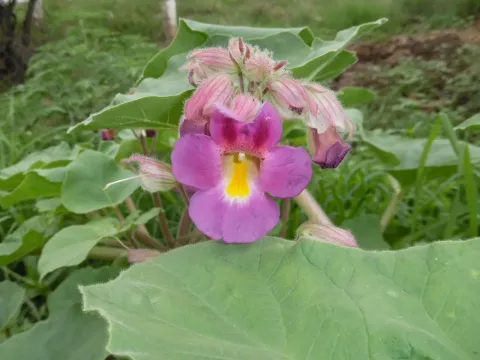
Proboscidea fragrans
Proboscidea fragrans
Proboscidea fragrans is a heat-loving plant, so in temperate climates, it must be grown from transplants. Seeds are typically sown indoors 4 to 6 weeks before the last expected spring frost, usually around late March or early April.
What the section contains
Proboscidea fragrans
The seeds have a very hard seed coat, so scarification or soaking in warm water for 24 hours is recommended to improve germination rates. Seeds should be planted about 1–2 centimeters deep in a well-draining potting medium.
Transplanting seedlings into the garden should only occur after all threats of frost have passed. The soil temperature must reach at least 15 degrees Celsius, as this species is extremely sensitive to cold.
When selecting a site, remember that the plant grows vigorously and wide, so you should leave at least 60–80 centimeters of space between individual plants to ensure proper airflow.
Using cloches or small tunnels can help protect young seedlings from early spring temperature fluctuations, ensuring a faster start and earlier pod development.
Proboscidea fragrans belongs to the Martyniaceae family and is native to the Southwestern United States and Northern Mexico. Being accustomed to arid conditions, the plant is highly tolerant of direct sunlight.
The crop prefers light, well-draining sandy or loamy soils with a neutral to slightly alkaline pH. Waterlogged soil is the greatest risk, as it can kill the root system very quickly.
Optimal growth requires abundant light and long daylight hours. In shaded areas, the plant will become leggy, flowering will be sparse, and fruit set will be significantly delayed or inhibited.
Irrigation should be moderate and consistent, especially during the flowering and pod-forming stages. Although drought-tolerant, consistent moisture is required to produce high-quality, tender pods.
While the plant responds well to organic fertilizers, excessive nitrogen application should be avoided as it may encourage excessive foliage growth at the expense of fruit production.
The primary agricultural product of this crop is the young, immature pod, which resembles a claw or horn. These are harvested while the skin is still tender enough to be pierced with a fingernail.
In culinary applications, the pods are valued for a unique flavor profile comparable to asparagus or young okra. They are frequently used for pickling, canning, or frying in batter.
If left on the plant too long, the pods develop tough, woody fibers and a hard inner capsule filled with seeds, rendering them unsuitable for eating, though they remain decorative.
A single plant can produce dozens of marketable pods throughout the season if cultivated correctly. The harvest window is extended and continues until the first autumn frosts arrive.
Beyond the pods, the plant is prized for its large, fragrant flowers that emit a pleasant, sweet, musk-like scent, making it a valuable addition to aesthetic gardens.
Proboscidea fragrans has a natural defense mechanism against many pests due to the sticky, glandular hairs covering its stems and leaves, which act as a barrier against small insects.
However, in conditions of high humidity, the plants may be susceptible to powdery mildew. Copper-based fungicides or biological control agents can be used to manage fungal infections.
Slugs and snails pose the greatest threat to young seedlings and can destroy new plantings overnight. The use of mulch barriers or mechanical traps is effective for minimizing damage.
During hot, dry weather, spider mites may become an issue. Regular overhead misting or the application of acaricides can effectively manage these populations during early infestations.
Root rot is the most serious threat, usually caused by overwatering or poor drainage. Ensuring soil structure is porous is the best preventative measure to keep the crop healthy.
Harvesting begins approximately 10 to 14 days after the flowers fade. At this stage, the pods have reached optimal size but have not yet developed the tough, lignified internal structure.
Pods should be harvested every day or every other day, as they mature very rapidly. Removing mature pods promptly is essential to encourage the plant to continue producing new flowers.
It is best to cut the pods from the stem using sharp shears or a knife to avoid damaging the brittle branches, which may be holding developing buds or flowers.
After picking, pods should be chilled quickly if they are not to be processed immediately. They do not store well at room temperature and lose their crunch within hours.
For long-term storage, the pods are typically pickled using a brine of vinegar, sugar, and various aromatic spices, preserving their texture and distinct flavor for several months.