
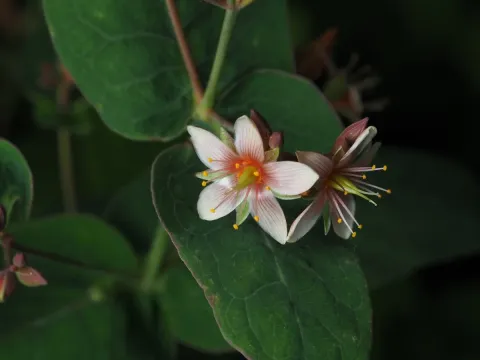
Marsh St. John's wort
Triadenum virginicum
Marsh St. John's wort (Triadenum virginicum) is a perennial herbaceous plant belonging to the Hypericaceae family.
What the section contains
Marsh St. John's wort
The species is native to North America, primarily found in wetlands, swamps, marshes, and acidic bogs, reflecting its natural evolutionary adaptation.
Botanically, it is characterized by opposite, gland-dotted leaves and distinct pink or purplish flowers arranged in terminal or axillary cymes.
The primary cultivation requirement is consistently moist to saturated soil, mirroring its native habitat conditions, alongside acidic soil pH.
In landscape architecture, it is used for naturalizing pond edges and bog gardens due to its high moisture tolerance and aesthetic floral display.
Fungal diseases such as leaf spots can become prevalent if the plant is grown in areas with poor airflow and excessive humidity around the foliage.
Herbivorous insects, including certain beetle species and lepidopteran larvae, may occasionally feed on the leaves, reducing the plant's overall vigor.
Soil pH that deviates from the acidic range can inhibit nutrient uptake, causing interveinal chlorosis and reduced flowering frequency.
Competition from aggressive invasive species can overwhelm Triadenum virginicum if not managed during the establishment phase.
Root system issues are often linked to extreme temperature fluctuations in shallow water or lack of appropriate dormant winter conditions.