
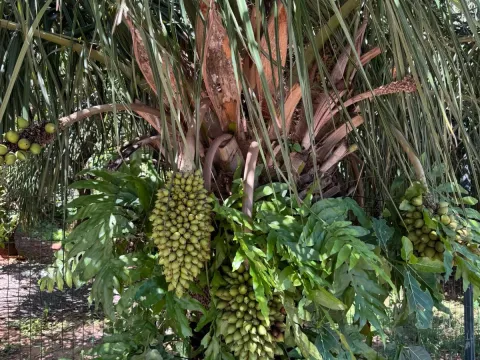
Maximiliana
Maximiliana
The Maximiliana genus, specifically Maximiliana regia, is propagated primarily through seeds. Germination is highly dependent on warm, humid conditions that mimic the natural tropical forest environment.
What the section contains
Maximiliana
In a nursery setting, seeds are sown in a well-draining, organic-rich substrate. Maintaining consistent moisture levels is vital, as seeds are susceptible to desiccation or rot if water management is not precise.
The germination period is notoriously lengthy, often spanning several months to a year. To improve uniformity in sprouting, pre-treatment techniques such as soaking or mechanical scarification of the seed coat are sometimes employed.
Once seedlings develop their first true leaves, they are hardened off before being transplanted to the main plantation. Careful handling of the root ball is essential to prevent shock, which can severely stunt the plant's growth.
Planting density is typically determined by the long-term growth habit of the tree. Providing ample space is crucial to ensure that mature trees have sufficient access to sunlight and soil nutrients, preventing competition within the stand.
As a member of the Arecaceae family, Maximiliana requires a strictly tropical climate to thrive. It cannot tolerate temperatures below a certain threshold and is highly sensitive to frost, limiting its commercial cultivation to frost-free zones.
The plant performs best in deep, fertile soils with a neutral to slightly acidic pH. Excellent drainage is non-negotiable, as the roots are prone to oxygen deprivation and decay if the soil remains waterlogged for extended periods.
High levels of solar radiation are necessary for the development of the canopy and the production of fruit bunches. While younger palms can survive under partial shade, mature trees require full sunlight for optimal physiological activity.
Sufficient water availability is a prerequisite for high yields. Although the plant can withstand brief dry spells, prolonged droughts will negatively impact fruit set and overall biomass production during the following season.
Nutrient management focuses on maintaining a balanced supply of macro and micronutrients. Foliar analysis is often used to monitor the palm's health, ensuring that deficiencies in potassium or magnesium are addressed promptly.
Maximiliana is valued primarily for its oil-bearing fruits, which grow in large, heavy clusters. These fruits serve as a source of vegetable oil for both human consumption and industrial manufacturing purposes.
Yield efficiency is heavily dependent on the management practices applied to the palm stand. Removing dead fronds and providing appropriate irrigation are two key factors that maximize the quantity and quality of the harvestable fruit.
Harvesting is traditionally a labor-intensive manual process due to the tree's height. Advances in plantation management are currently focused on selecting shorter varieties to improve the ease and safety of mechanized harvesting.
In addition to oil, the fiber derived from the leaves is of significant economic interest. It is a durable material used locally for weaving, cordage, and construction, making the Maximiliana palm a multi-purpose crop for rural development.
A mature, well-maintained Maximiliana palm provides a reliable annual yield, contributing significantly to the income of local communities and supporting sustainable agroforestry systems in its native range.
Weevils are among the most destructive pests for the Maximiliana palm. The larvae bore into the apical meristem, which often results in the immediate death of the tree, making pest surveillance the highest priority for growers.
Fungal diseases thrive in the high-humidity environments typical of tropical plantations. These pathogens can attack both the roots and the fronds, requiring a proactive approach through sanitation and the application of fungicides.
Defoliating insects can occasionally reach infestation levels that impede the palm's ability to photosynthesize. Integrated pest management strategies, focusing on biological controls, are preferred to minimize the use of harsh synthetic chemicals.
Root rot, driven by poor drainage, remains a persistent threat. By preventing soil compaction and ensuring proper site selection, farmers can mitigate the conditions that favor the development of these subterranean pathogens.
Regular field inspections and the maintenance of a diverse ecosystem within the plantation help to keep pest populations at manageable levels, ensuring the long-term health and productivity of the Maximiliana palm.