
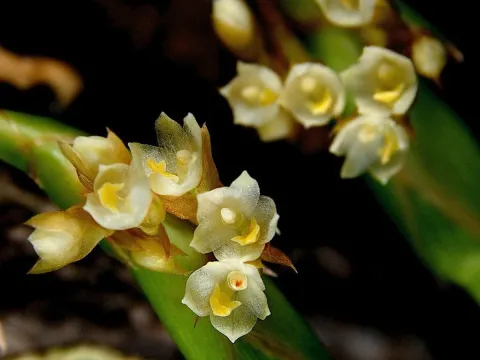
Maxillaria parviflora
Maxillaria parviflora
Maxillaria parviflora is an epiphytic species belonging to the Orchidaceae family. Native to the tropical regions of Central and South America, it naturally thrives in humid environments, typically anchoring itself to tree branches and trunks in shaded forest areas.
What the section contains
Maxillaria parviflora
The plant requires a stable temperature range between +18°C and +25°C to maintain healthy metabolic processes. High humidity is essential for its development; keeping levels around 60–70% ensures the plant does not dehydrate, especially during the active growing season.
The potting medium must be highly porous to ensure efficient gas exchange for the root system. A blend of high-quality pine bark, charcoal, and sphagnum moss is recommended to balance moisture retention with excellent drainage properties.
Light requirements for this species include bright, filtered sunlight. Direct exposure to intense afternoon sun can cause severe leaf scorch, thus requiring the use of protective shading curtains or positioning the plant in a naturally diffuse light area.
Irrigation should be performed using soft, room-temperature water. It is crucial to allow the substrate to dry slightly between waterings, as epiphytes are highly susceptible to root suffocation and decay if constantly saturated.
Pests such as spider mites and scale insects are the primary threats to this culture. Integrated pest management, including regular inspection and the application of horticultural soaps or systemic insecticides, is necessary to maintain plant vigor.
Fungal diseases like root rot and leaf spot are often caused by excessive moisture and poor air circulation. Improving ventilation around the plant and applying broad-spectrum fungicides can significantly mitigate the risk of these infections.
Bacterial soft rot can occur if water is trapped in the leaf axils for extended periods. If affected, the diseased tissue must be surgically removed with a sterilized blade and the area treated with a disinfectant to prevent further spread.
Botrytis, or gray mold, can appear during cooler and damp weather. Maintaining a clean growing environment and avoiding high humidity without adequate airflow are the best preventative measures against this pathogen.
Strategic fertilization with a low-salt orchid-specific fertilizer helps support the plant's natural defense systems. Fertilizing should be kept at a diluted concentration, applied only during the active vegetative growth phase to avoid over-salting the potting medium.