
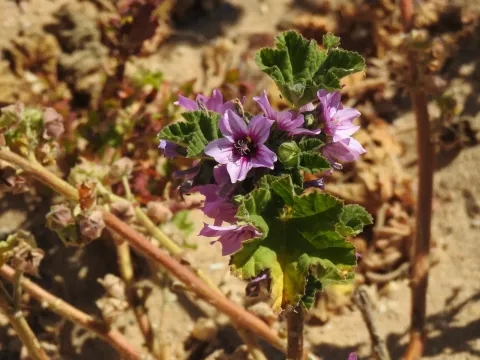
Mauritanian tree mallow
Lavatera mauritanica
Lavatera mauritanica is an annual or biennial plant belonging to the Malvaceae family. Seeds are typically sown in open ground during spring, once the soil has warmed up to 10–12 degrees Celsius, usually in April or early May.
What the section contains
Mauritanian tree mallow
To encourage early flowering, many growers prefer starting the plants in greenhouses or frames during March, allowing for a stronger root system before transplanting to the final location.
The seeds should be sown at a depth of about 1 to 1.5 centimeters, ensuring they are placed in a light, well-draining substrate that promotes rapid germination.
Spacing is a crucial aspect of cultivation, as the plant develops into a robust, spreading bush. Therefore, maintaining a distance of 30 to 50 centimeters between plants is recommended for healthy growth.
While the seeds can remain viable for up to three years, fresh seeds from the current season generally offer the highest germination rates and more vigorous seedlings.
This species thrives in sunny, open locations. Insufficient light levels often lead to leggy stems and poor flower production, diminishing the plant's overall aesthetic value.
It is not particularly demanding regarding soil quality, though it performs best in light, fertile loamy soils that possess good drainage and a balanced moisture profile.
Proper drainage is essential, as the plant is sensitive to waterlogged conditions, which can lead to root rot and other physiological issues in heavier soil types.
While the Mauritanian tree mallow is moderately drought-tolerant, consistent watering during dry spells is recommended to maximize foliage density and the duration of the blooming period.
Regular applications of balanced mineral fertilizers, especially during the early bud formation phase, will significantly enhance the intensity and size of the flowers.
The primary economic use of Lavatera mauritanica is in ornamental horticulture, where it is highly valued for its long-lasting and prolific flowering habit in garden beds.
The plant serves as a significant nectar source, making it an excellent choice for supporting local populations of bees and other essential pollinating insects.
In certain agricultural contexts, it can be utilized as a green manure or cover crop, helping to improve soil structure and organic content through its dense biomass production.
Gardeners appreciate its self-seeding capability, which allows the plant to persist in the landscape with minimal intervention over multiple seasons if conditions are favorable.
Beyond its aesthetic function, the biomass produced at the end of the season can be effectively incorporated into compost systems to create nutrient-rich soil amendments.
Rust is the most common fungal disease affecting this plant, appearing as rusty or brown spots on the leaves, which can cause significant tissue damage if left untreated.
Under conditions of high humidity or poor air circulation, powdery mildew may develop, appearing as a white powdery coating on the foliage and inhibiting photosynthesis.
Aphids are the most frequent insect pests, often attacking young shoots and buds, causing deformation of the growth and attracting secondary issues like sooty mold.
Spider mites can become a problem in hot, dry weather, leading to yellowing of the leaves and premature senescence of the plant, which requires prompt acaricide application.
To maintain plant health, it is vital to practice crop rotation, ensure proper spacing for airflow, and apply appropriate fungicide or insecticide treatments at the first sign of distress.
Maintenance during the growing season includes the regular deadheading of spent flowers, which prevents the plant from wasting energy on seed production and encourages further flushes of bloom.
For those interested in seed collection, the strongest specimens should be allowed to mature until the seed pods turn brown and brittle, signaling that the seeds are fully developed.
Seeds should be harvested in dry weather, then left to dry completely in a well-ventilated, shaded area before being cleaned and stored in paper bags for future use.
Proper storage in a cool, dark, and dry environment is critical to ensure high germination rates when the seeds are sown in the following season.
At the end of the cycle, the entire plant should be cleared from the soil to reduce the risk of overwintering pathogens that might affect future plantings.