
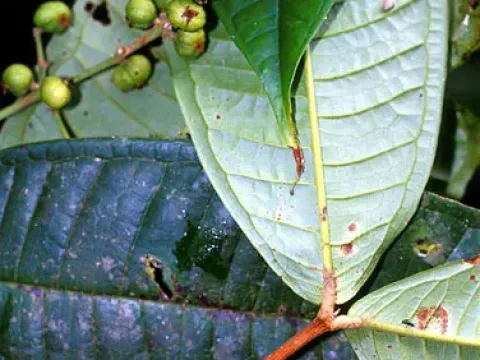
Marlierea
Marlierea
Marlierea is a genus of trees and shrubs belonging to the Myrtaceae family, native to the tropical forests of South America, particularly common in Brazil.
What the section contains
Marlierea
These plants thrive in tropical climates with high humidity and consistent temperatures, requiring protection from any potential frost or cold spells.
Successful cultivation necessitates fertile, well-draining soil rich in organic matter, as the roots are sensitive to waterlogging and soil compaction.
While the plants enjoy sunlight, they typically require partial shade during their early development stages to mimic the understory of a tropical canopy.
Consistent moisture management is crucial, as Marlierea species cannot tolerate prolonged dry periods, necessitating regular irrigation schedules.
The fruit produced by Marlierea is generally a small berry that features a unique aroma and is consumed primarily by local populations within its range.
Commercial utilization of the crop is limited, and harvest activities are often associated with wild harvesting or small-scale cultivation on local farms.
The fruits serve as an ingredient for traditional culinary preparations, including beverages and artisanal jams, offering distinct flavor profiles.
Yield consistency can be impacted by pollinator activity and seasonal rainfall, making the crop sensitive to environmental fluctuations.
Beyond fruit production, the dense wood of some species has been historically recognized for local construction or small-scale woodcraft purposes.
Fungal diseases related to root rot are common in Marlierea when grown in poorly ventilated environments or soils with excessive water retention.
Common pests such as scale insects, aphids, and spider mites can infest the foliage, particularly if the plant is under stress from low humidity.
Leaf spot pathogens pose a significant threat during rainy seasons, potentially leading to premature defoliation and weakened plant vitality.
Prevention includes maintaining proper air circulation through pruning and ensuring that the soil drainage systems are operating at full capacity.
Effective pest management involves integrated practices, prioritizing non-chemical methods before escalating to targeted biological or chemical treatments.