
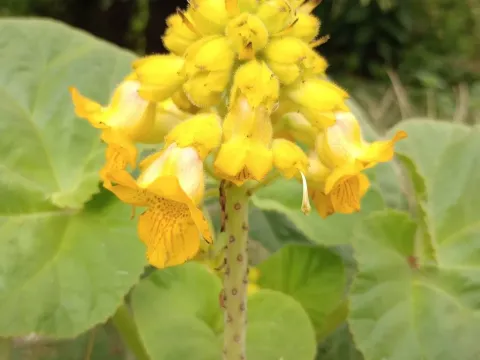
Ibicella
Ibicella
Ibicella lutea, commonly known as the devil's claw or unicorn plant, is a member of the Martyniaceae family, valued for its unique, hooked seed pods.
What the section contains

Ibicella
Sowing should occur only after the danger of frost has passed, as the plant is highly sensitive to cold temperatures during its early growth stages.
Starting seeds indoors in seed trays filled with light, well-draining substrate about six weeks before the last frost date ensures a longer growing season.
The seeds have a thick, protective seed coat that benefits from pre-soaking in warm water for 24 hours to improve germination percentages.
Space the seedlings at least 60 centimeters apart when transplanting outdoors to accommodate their vigorous growth habit and large leaves.
Ibicella requires a site with full exposure to direct sunlight to reach its maximum productivity and prevent etiolation of the stems.
The ideal soil is sandy or loamy, well-aerated, and rich in organic matter, ensuring water drains freely to protect the taproot from rotting.
Consistent warm temperatures are essential; the plant performs best when daytime temperatures range between 20 and 30 degrees Celsius.
While the plant shows some tolerance for mild moisture stress, regular watering during the flowering and fruit-set phase is necessary for yield.
Incorporating compost or well-rotted manure during site preparation provides the necessary nutrients for the plant's rapid vegetative development.
The primary agricultural interest in Ibicella lies in its young, immature pods, which are edible and often used in pickling or gourmet culinary applications.
Each mature plant can produce several dozen pods throughout the season, provided the flowers are successfully pollinated by local insect populations.
Harvesting must be timed carefully; the pods should be harvested while they are soft and tender, before the internal fibers harden and the hooks develop.
As the fruits mature, they become inedible and highly decorative, forming woody structures with long, sharp appendages that are harvested for floral design.
Successive harvesting of immature pods encourages the plant to maintain its reproductive cycle, potentially increasing the total number of fruits produced.
Excessive humidity and poor soil drainage are the most significant threats to Ibicella, often leading to fungal crown rot and root diseases.
Powdery mildew can affect the foliage during periods of fluctuating humidity, necessitating early intervention with organic fungicides or improved airflow.
Pests such as aphids and spider mites can infest the soft tips of the plants, particularly during dry spells, which may stunt the overall plant growth.
Monitoring the undersides of leaves for signs of infestation is crucial, as early detection allows for effective management without harsh chemicals.
Maintaining a clean growing area and avoiding excessive nitrogen fertilization helps keep the plants vigorous and more resistant to common garden pests.
The harvest period typically begins 60 to 80 days after germination, once the fruit pods reach the desired size of 5 to 8 centimeters.
Use sharp pruning shears to harvest the pods, taking care not to damage the stems, which can be somewhat brittle as the plant matures.
Immediate processing or refrigeration is recommended for the harvested pods, as their texture and flavor degrade rapidly at room temperature.
For those interested in decorative uses, let a portion of the fruit remain on the plant until it is fully dried and brown to collect the characteristic claws.
The harvest window is extended by removing fruits regularly, preventing the plant from focusing its energy on seed maturation and thus prolonging the life cycle.