
Pseudobombax grandiflorum
Pseudobombax grandiflorum
Description
Growing requirements
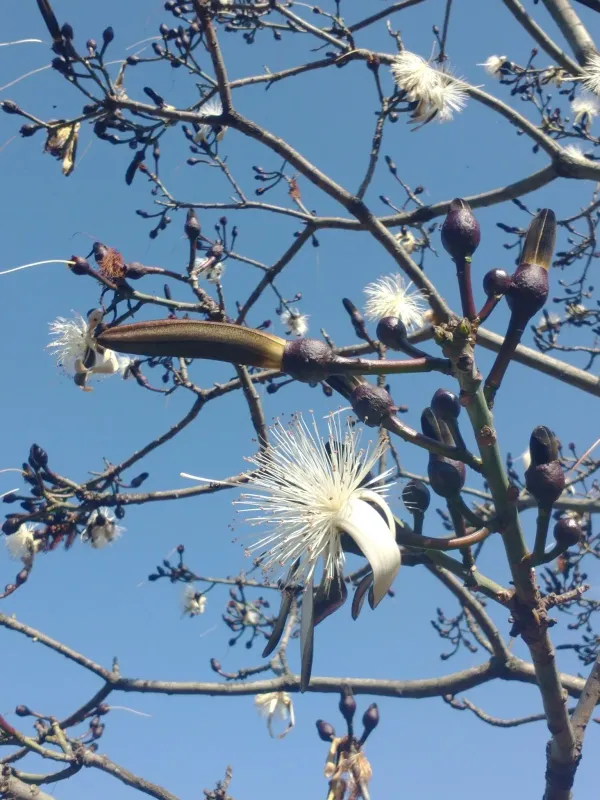
Pseudobombax grandiflorum is a notable tree species within the Malvaceae family, native to the tropical regions of South America. It is widely recognized for its impressive size, often reaching heights of over 20 meters, and its spectacular showy flowers that emerge directly from the branches during the dry season.
Climate requirements for this culture are strictly tropical; it demands high temperatures year-round and is highly intolerant of frost. Successful cultivation requires a frost-free environment with significant sunlight, which is necessary for the plant to complete its reproductive cycle and produce its characteristic pods.
The soil preference for Pseudobombax involves well-drained, nutrient-rich substrates. It is essential to ensure that the planting site has excellent hydraulic conductivity to prevent waterlogging, which can cause rapid decline in the plant's health due to root rot. Soils ranging from slightly acidic to neutral are ideal for optimal mineral uptake.
Botanically, the tree exhibits a thickened, often bottle-shaped trunk that serves as a water storage organ, allowing it to withstand seasonal droughts. Its leaves are digitately compound, and the flowers possess numerous long, delicate stamens that are highly attractive to nocturnal pollinators like bats.
In terms of economic use, Pseudobombax grandiflorum is primarily valued in ornamental landscaping and urban forestry in warm climates. Its rapid growth and resilience in suitable habitats make it a candidate for reforestation projects aimed at restoring degraded tropical forest areas.
Main diseases and pests
The primary threats to the health of Pseudobombax grandiflorum include fungal infections such as anthracnose and various root pathogens. These diseases are most prevalent in areas with high humidity, where poor ventilation in the canopy creates an environment conducive to spore dispersal.
Pest pressures primarily come from scale insects and aphids, which frequently colonize the tender young leaves and buds. Left unmanaged, these pests can lead to stunted growth and reduced floral displays, necessitating proactive monitoring programs in nurseries and plantations.
Effective management requires a combination of cultural practices, such as maintaining proper spacing between trees to ensure airflow, and the selective use of environmentally friendly pesticides. Integrated Pest Management (IPM) strategies are highly recommended to balance pest control with pollinator safety.
Weed competition is a significant threat during the establishment phase of young trees. Invasive grasses and woody vines can easily overtake seedlings, blocking access to light and nutrients, which significantly slows down development and increases the risk of mortality.
Structural integrity can also be compromised by wood-boring beetles if the tree is already stressed by drought or nutrient deficiencies. Maintaining tree vigor through balanced fertilization and proper irrigation during dry months is the best defense against these internal threats.