
Portia tree
Thespesia populneoides
Description
Growing requirements
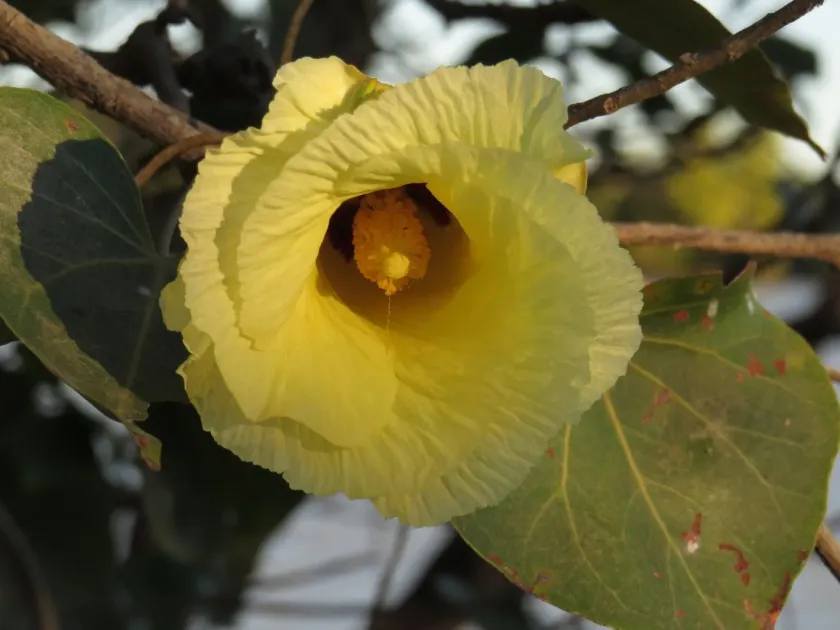
The Portia tree (Thespesia populneoides) is a significant tropical species belonging to the Malvaceae family. It is a perennial tree known for its wide, heart-shaped leaves and bright yellow flowers that transition to purple.
Native to the tropical regions of Asia and East Africa, this species thrives in coastal environments. It has a high tolerance for salt spray and sandy soil conditions, making it a pioneer plant for maritime habitats.
Agricultural success depends on providing full sun exposure and well-draining soil. While it prefers moist environments, it is remarkably drought-tolerant once established, owing to its deep taproot system.
In terms of management, the tree is often used for windbreaks or as a shade plant in tropical agroforestry. It responds well to pruning, which helps in maintaining its structure and promoting timber quality.
The economic value of this tree is largely attributed to its heartwood, which is highly resistant to decay and termites. It is traditionally used in high-quality carpentry, boat building, and even for medicinal extracts derived from its bark and fruits.
Main diseases and pests
Common agricultural challenges include fungal infections in roots caused by poor drainage. Pests such as mealybugs and various species of lepidoptera larvae can occasionally cause significant leaf damage in nurseries.