
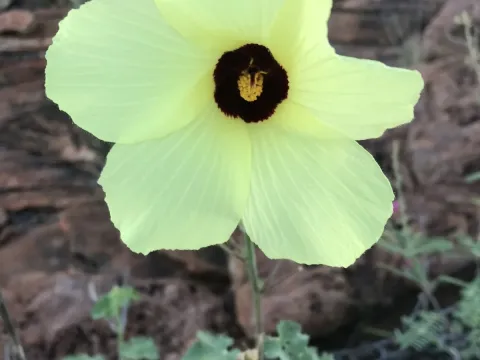
Hibiscus physaloides
Hibiscus physaloides
Sowing Hibiscus physaloides should be performed during the spring months once the soil temperature is consistently above 15 degrees Celsius to ensure rapid germination.
What the section contains
Hibiscus physaloides
Seeds are typically sown in rows with spacing of 50 to 70 centimeters, allowing sufficient room for plant development and mechanical maintenance of the crop.
The optimal seeding depth is shallow, ranging from 2 to 3 centimeters, which provides adequate moisture contact while allowing the sprout to emerge quickly.
In regions with cooler spring climates, starting seeds in greenhouses or containers can ensure a stronger seedling base before transplanting to the field.
Ensuring a consistent seed density is crucial for uniform fiber quality across the field, as overcrowding can lead to thinner, less resilient stems.
Hibiscus physaloides is a member of the Malvaceae family, sharing similar growth requirements with other tropical fiber crops like kenaf or roselle.
The plant thrives in warm, sunny environments and requires long hours of direct sunlight to maximize stem elongation and overall biomass production.
Well-draining, fertile loamy soils are ideal for cultivation; the species is sensitive to waterlogged conditions which can lead to root rot and stunted growth.
Regular irrigation is necessary during the active growth phase, particularly in arid climates, though the crop shows moderate resilience once fully established.
A balanced fertilization program, focused on nitrogen for vegetative growth and potassium for stem strength, significantly enhances final fiber yields.
The primary agricultural utility of this crop is its long, durable bast fiber, which is extracted from the bark of the stalks after harvesting.
These fibers are highly valued for their strength, making them suitable for manufacturing ropes, twines, heavy-duty fabrics, and eco-friendly packaging materials.
Beyond traditional textiles, the plant biomass is increasingly explored as a cellulose source for the paper industry and as a precursor for bio-based composites.
The yield of raw fiber is highly dependent on the plant density and the efficiency of the post-harvest retting process used to separate the fibers.
By-products of the processing cycle, including the woody core of the stalks, can be repurposed as agricultural mulch or as a source of biofuel pellets.
Aphids represent the most common pest threat, particularly colonizing tender new growth and significantly reducing the vitality of young plants.
Spider mites may become a problematic issue during extended dry periods, necessitating vigilant crop scouting and appropriate moisture management.
Fungal pathogens causing leaf spot and stem blight can occur if humidity levels are excessively high or if there is poor air circulation between rows.
Implementing a strict crop rotation schedule is the most effective cultural method to prevent the buildup of soil-borne pathogens and pests.
Integrated pest management strategies should be prioritized, using biological controls whenever possible to protect the quality of the harvested fibers.
Harvesting should ideally take place during the flowering stage, which ensures the best balance between stem biomass and fiber quality properties.
Stalks are cut close to the ground, bundled, and allowed to partially dry in the field before being transported for the retting process.
Retting involves soaking the stalks in water to break down pectin and lignin, allowing the long fibers to be separated from the stem core.
Following retting, the fiber is thoroughly washed, sun-dried, and combed to remove impurities before being graded for market specifications.
Proper storage in dry, well-ventilated areas is essential to prevent degradation of the fiber and to maintain its structural integrity until it reaches the manufacturer.