
Helicteres jamaicensis
Helicteres jamaicensis
Description
Sowing dates
Helicteres jamaicensis is a tropical shrub that propagates primarily through seeds in its natural habitat. In an agricultural context, seeds require pre-sowing stratification to break their dormancy and enhance germination rates, given the fruit's dense, woody structure.
The optimal time for sowing is the onset of the rainy season, which provides the necessary moisture for the development of the root system. Seeds should be planted in well-warmed soil at a depth of 2–3 centimeters, maintaining sufficient spacing between rows for optimal growth.
To accelerate germination, seeds are often soaked in warm water for 24 hours. The temperature during the germination phase should be strictly maintained between 25 and 30 degrees Celsius, as the species is highly sensitive to thermal fluctuations during early development.
Vegetative propagation via stem cuttings is also a viable method, usually performed during the active sap flow period. Cuttings help preserve genetic traits and shorten the timeline for producing commercially viable fiber yield.
Planting density is determined by the specific production goals: closer spacing is preferred for fiber extraction, whereas wider spacing is recommended for seed multiplication plots to ensure robust bush development.
Growing requirements
Belonging to the Malvaceae family, this plant is native to the Caribbean tropics and is well-adapted to high light intensity. It thrives in well-drained loamy or sandy soils and is highly intolerant of waterlogging, which rapidly causes root rot.
The ideal soil pH ranges between 6.0 and 7.5. While the plant shows resilience to short dry spells, a consistent moisture supply is essential during the vegetative growth phase to ensure the production of high-quality bast fiber.
As a true tropical plant, Helicteres jamaicensis cannot withstand even mild frost. In temperate regions, it must be grown in greenhouses or under controlled climate conditions to avoid physiological damage and growth arrest.
Mineral nutrition should be balanced, emphasizing nitrogen application during the initial growth stages to maximize biomass. As the plant approaches the budding stage, potassium and phosphorus fertilizers are introduced to improve fiber tensile strength.
Regular cultivation of the soil surface around the plant base is recommended to promote root aeration and inhibit the buildup of soil-borne pathogens, ensuring healthy development throughout the growing season.
Yield
The primary economic product is the bast fiber extracted from the stems. Yield efficiency depends on both environmental conditions and the age of the plant, with productivity peaking during the second to third year of maturity.
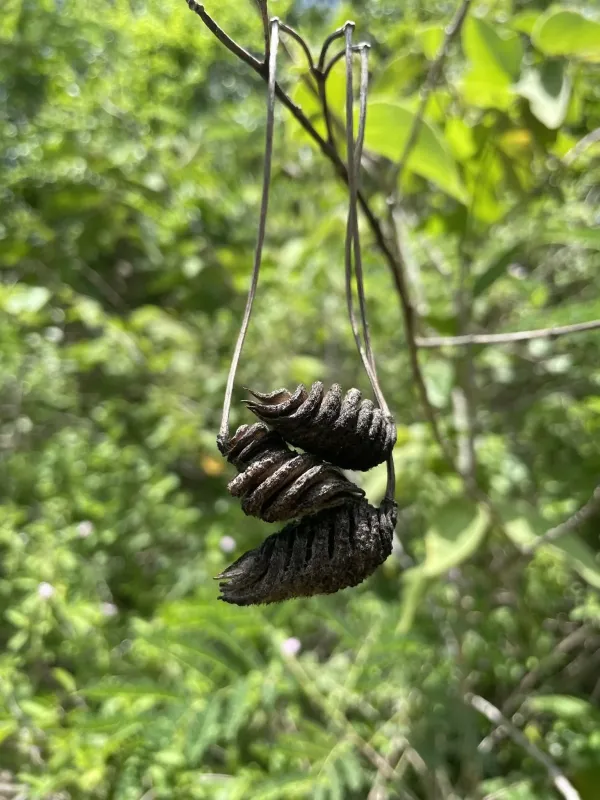
A biological feature of the plant is its unique twisted fruit, which holds independent value in decorative horticulture and the pharmaceutical industry due to the presence of specific bioactive compounds.
Under intensive agricultural practices, fiber output per hectare is competitive with other fiber-producing Malvaceae. It is crucial to manage harvest timing carefully; stems must be harvested before they become overly lignified to ensure the highest quality of fiber.
Seed production is prolific, with individual shrubs capable of producing significant quantities of seeds within their distinctive spiral pods. This allows for effective annual regeneration of the production area.
The economic utility extends to the use of fibers in manufacturing ropes, coarse textiles, and braided crafts, validating the feasibility of commercial cultivation in its native and suitable tropical climates.
Main diseases and pests
Like most members of the Malvaceae family, Helicteres jamaicensis is susceptible to common pests such as aphids and spider mites, which feed on succulent leaves and significantly retard plant growth if left unmanaged.
Anthracnose is a prevalent fungal disease that manifests as dark spots on the stems and leaves, especially during periods of high humidity. Proactive measures include removing affected tissues and applying appropriate fungicides to prevent further infection.
Root rot remains a major threat in cases of poor drainage or over-irrigation. Proper soil management and adherence to irrigation schedules are fundamental to protecting the root integrity of the crop.
For pest control, biological insecticides are highly recommended, particularly for operations aiming for ecological certification. Chemical treatments should be reserved for cases of severe infestation to minimize environmental impact.
Disease prevention strategies center on spatial isolation between plots, strict adherence to crop rotation, and the use of certified, disinfected seed material to minimize the risk of introducing pathogens into the field.
Harvesting
Harvesting stems for fiber production must occur at the technical maturity stage, when plants have reached maximum height but before the tissues have developed excessive woodiness. Delaying the harvest reduces fiber elasticity and decreases market quality.
Stems are harvested by cutting them manually or mechanically at the base. Once collected, they undergo a retting process—soaking in water—to effectively separate the long fibers from the woody core, which is the most critical stage of primary processing.
Harvesting the seed pods requires careful handling due to their specific morphology. They should be gathered by hand during dry weather when the pods turn brown, indicating the complete maturity of the seeds stored inside.
Post-harvest, the seeds must be thoroughly cleaned and dried in the shade to prevent loss of viability caused by direct sunlight or high-temperature stress during the drying process.
Remaining biomass after the harvest should be shredded and incorporated into the soil as organic matter, which aids in soil fertility restoration following the intensive growth cycle of the crop.