
Helicteres isora
Helicteres isora
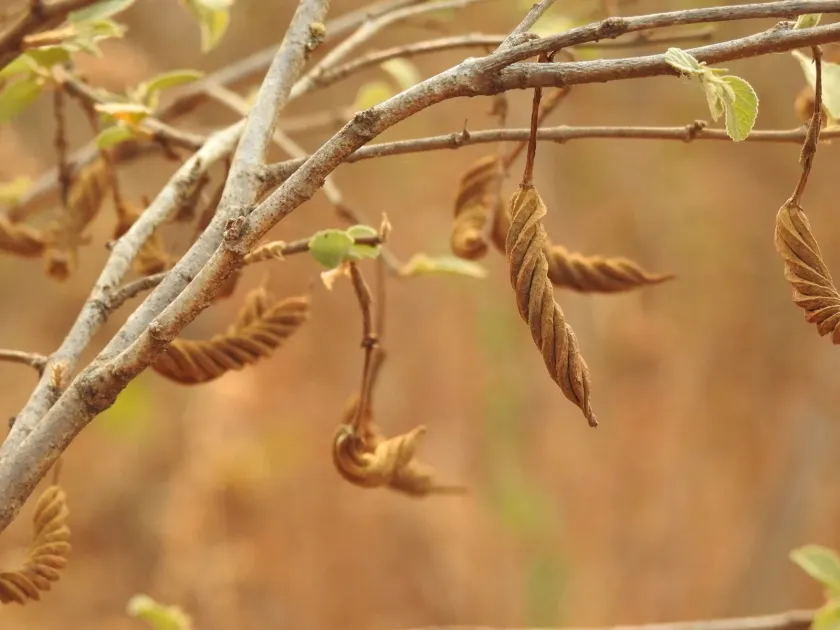
Description
Sowing dates
Helicteres isora, commonly known as the East Indian screw tree, is a perennial shrub belonging to the Malvaceae family. Sowing is typically conducted at the beginning of the rainy season, as the seeds require consistent moisture for successful germination. In agricultural practice, seeds are often started in nursery beds before being transplanted to the field.
To improve germination rates, seeds should be soaked in warm water for 12 to 24 hours prior to planting. Direct seeding in the field requires proper spacing to ensure adequate room for root development; an interval of 2 to 3 meters between bushes is considered optimal for plantation management.
Regular weeding is essential for young seedlings, as weeds can significantly suppress early growth. Before planting, the site should be plowed and enriched with organic fertilizer to provide the necessary nutrients for the shrubs' establishment and development.
Optimal temperatures for growth range between 25 and 30 degrees Celsius. Agronomists emphasize the importance of using high-quality seed stock to minimize the risk of soil-borne pathogens affecting the young, vulnerable plants during the initial growth phase.
The plant adapts well to various environments, but it thrives best when provided with stable moisture conditions during the first few weeks of its life cycle. Proper preparation and consistent maintenance during the establishment phase are key to achieving high yields in later years.
Growing requirements
Helicteres isora prefers well-drained loamy or sandy soils with a neutral or slightly acidic pH. The plant is drought-resistant but performs best when provided with moderate moisture during the vegetative growth phase. It thrives in both full sunlight and light shade environments.
Native to tropical regions of Asia, the plant is well-adapted to climates with distinct dry and wet seasons. This climatic adaptation is fundamental to the formation of its characteristic spirally twisted fruits, which are a hallmark of the species and the primary source of its medicinal value.
Core cultivation needs include regular cultivation of the soil around the base of the bushes to improve aeration. In nutrient-poor soils, nitrogen-rich fertilizers are recommended to boost the production of green biomass, which is vital for the extraction of industrial-grade fibers.
Waterlogging must be avoided, as stagnant water is detrimental to the plant's root system and often leads to root rot. Choosing sites with proper slope and drainage is critical to prevent excess water accumulation, especially during the monsoon season.
While the plant is quite hardy, it can be sensitive to extreme frost. In regions subject to occasional cold snaps, applying mulch around the base of the shrub helps maintain a stable root zone temperature and preserves soil moisture during dry spells.
Yield
The economic value of Helicteres isora is derived mainly from the strong fiber extracted from the bark of its young stems. Yields are maximized by implementing regular pruning schedules, which stimulate the growth of new, longer, and more flexible shoots suitable for processing.
The fruits, known for their unique spiral shape, are highly valued in traditional and modern medicine due to the presence of bioactive compounds. Harvesting is done by hand as the fruits reach full maturity, ensuring that the chemical integrity of the material is preserved for pharmaceutical use.
- Fiber production: used for making ropes, twines, and coarse textiles.
- Pharmaceutical use: fruits are used as a remedy for stomach disorders.
- Biofuel: woody biomass can be utilized for energy production in rural areas.
Economic efficiency is enhanced by adopting modern extraction techniques, which increase fiber recovery rates and improve product quality. By optimizing the post-harvest processing of stems, growers can significantly increase the value of their output on the local market.
Peak yield is typically reached between 3 and 5 years after planting. Following this period, rejuvenation pruning is recommended to sustain healthy growth rates and ensure that the plantation remains productive for a longer duration.
Main diseases and pests
Major pests affecting this crop include aphids and various leaf-eating insects that can significantly slow vegetative growth. Integrated pest management strategies, including the use of biological insecticides and the introduction of beneficial insects, are effective in controlling populations without harming the environment.
Fungal diseases, such as leaf spot, often arise from poor irrigation management and inadequate field aeration. Preventing these diseases requires prompt removal of infected plant material and adherence to strict crop rotation practices to ensure long-term site health.
High humidity during the flowering and fruit-set periods can lead to mold development on the fruits. Regular plantation inspections and selective thinning of overly dense bushes improve air circulation, which significantly reduces the risk of disease outbreaks.
Bacterial infections causing shoot wilt require immediate attention. Proper sanitation of tools is essential, as contaminated equipment is a primary vector for spreading pathogens between plants during the pruning process.
Root-knot nematodes can be a problem in sandy soil types. Utilizing cover crops and maintaining soil health through organic matter incorporation helps suppress soil parasite populations, keeping the plants strong and resistant to underground stressors.
Harvesting
Fiber harvesting takes place after the flowering period, once the stems reach maturity but before they become too woody. The harvested stems are soaked in water to loosen the fibers from the bark, a process that requires careful timing to maintain the tensile strength of the extracted material.
Fruit harvesting is conducted in stages to ensure only fully matured pods are collected. It is critical to harvest before the pods dry out and crack on the shrub to prevent seed loss. Drying should be performed in a shaded, well-ventilated area to protect the pharmacological quality of the fruits.
Transporting raw materials requires ventilated packaging to prevent self-heating and mold growth. Storage conditions should be cool and dry, protecting the inventory from humidity and contamination, which is essential for preserving the quality of the raw output.
Post-harvest grading allows for the categorization of fiber into different qualities, catering to various industry requirements. Effective pre-sale preparation ensures that the farmer receives the best possible market price for the produce.
After the harvest, remaining crop residue is incorporated back into the soil as organic amendment. This sustainable practice helps replenish soil fertility and creates a closed-loop system, ensuring the long-term viability of the plantation and promoting environmentally friendly farming methods.