
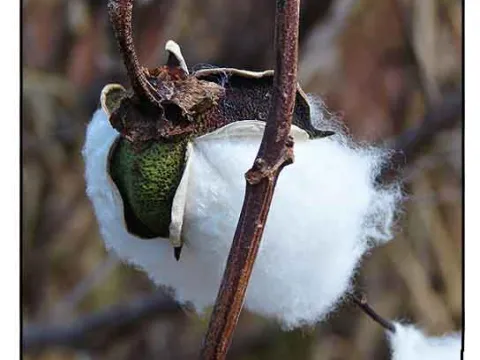
Gossypium vitifolium
Gossypium vitifolium
Gossypium vitifolium, a member of the Malvaceae family, requires specific thermal conditions to ensure successful germination and early plant development.
What the section contains
Gossypium vitifolium
Sowing typically commences when the soil temperature consistently reaches 15–18 degrees Celsius, ensuring the seeds are not subjected to cold stress.
Farmers must carefully time the planting to avoid potential late spring frosts, which can devastate newly emerged cotton seedlings in the field.
Standard agronomic practice involves placing seeds at a consistent depth to promote uniform emergence and establish a strong, vigorous plant population.
Spacing between rows should be adequate to allow for canopy development and to provide enough room for maintenance operations throughout the season.
This crop thrives in regions with intense solar radiation, requiring full sun exposure to stimulate photosynthetic activity and maximize fiber production.
Well-drained, fertile loamy soils are ideal, providing the necessary aeration for root systems while maintaining sufficient moisture levels for the plant.
The optimal temperature range for development is between 25 and 30 degrees Celsius, as extreme cold or heat can negatively affect fruit set.
Adequate water supply is crucial during the budding and flowering phases, where consistent soil moisture prevents flower shedding and improves yield.
It is important to avoid saline or waterlogged soils, as the root system of the Gossypium species is highly sensitive to hypoxic conditions and high salinity.
The yield of Gossypium vitifolium is largely dependent on the quality of soil management, irrigation efficiency, and balanced nutrient application.
High-yielding crops are characterized by uniform fruit distribution and healthy boll development, which contribute to the final weight of the harvested lint.
Plant density plays a significant role; excessive crowding can lead to competition for resources, while sparse planting may underutilize land potential.
Regular monitoring of field conditions and precise input management can lead to significant increases in raw cotton output per hectare.
Ultimately, yield is measured not only by the quantity of raw material but also by the fiber length and quality characteristics required by textile industries.
Insects such as aphids and spider mites are major threats to cotton crops, particularly in dry and hot conditions where they can reproduce rapidly.
The cotton bollworm is a particularly destructive pest that feeds on buds and bolls, causing direct damage and reducing the overall harvest quality.
Fungal pathogens like Fusarium wilt represent a severe threat to crop health by obstructing the vascular system, leading to rapid wilting and plant death.
Bacterial blight can also cause significant damage, especially during periods of high humidity, affecting both the foliage and the structural bolls.
Integrated pest management, including crop rotation and the use of resistant varieties, is essential to mitigate these biological risks effectively.
Harvesting is initiated once the bolls have naturally dehisced, exposing the mature fiber ready for collection from the cotton plant.
Mechanical harvesting is common in large-scale operations, requiring well-maintained equipment to ensure the fibers are collected with minimal debris.
In some regions, manual harvesting is still practiced to ensure selective picking of mature bolls, which preserves the quality of the raw fiber.
Once harvested, the raw material must be cleaned and dried to prevent fungal growth during storage and to prepare it for ginning processes.
Storage facilities must be dry and well-ventilated to maintain the integrity of the cotton fibers before they are shipped to processing facilities.