
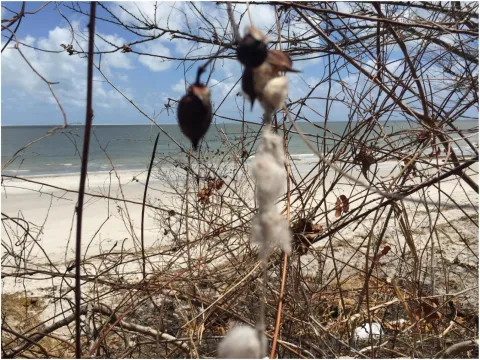
Gossypium mustelinum
Gossypium mustelinum
Gossypium mustelinum is a wild perennial shrub belonging to the Malvaceae family. It is endemic to the semi-arid regions of northeastern Brazil. Unlike its cultivated relatives, this plant has evolved to thrive in highly challenging environmental conditions.
What the section contains
Gossypium mustelinum
The plant requires a tropical climate with a distinct dry season. It is naturally adapted to withstand prolonged periods of drought, which makes its physiological mechanisms of water conservation a subject of intense scientific research for crop improvement.
Soil requirements for this species are centered on well-drained alluvial substrates. The roots are adapted to find moisture deep in the soil profile, often positioning themselves near seasonal water channels where they can access groundwater even during the hottest months.
Botanically, it displays specific morphological traits such as smaller leaves with dense trichomes, which help reduce water loss through transpiration. The flowering cycle is strictly synchronized with rainfall patterns to ensure successful pollination and seed dispersal.
In terms of хозяйственное (economic) utility, the plant is not used for textile fiber production due to its poor quality. However, its value is immense in the field of genetic engineering and traditional breeding, serving as a donor of stress-tolerance genes.
Habitat loss represents the primary threat to Gossypium mustelinum. As natural land is converted into commercial agricultural fields or grazing pastures, the native wild populations face immediate risks of displacement and extinction.
Pests and diseases, while generally less destructive to wild species than to monocultures, can still pose a challenge. Invasive insects can weaken the plant, making it susceptible to secondary infections or environmental stress during the dry season.
Fungal pathogens represent another significant threat, particularly in years with uncharacteristic rainfall distribution. Excessive humidity can lead to fungal outbreaks that damage the photosynthetic tissues and limit the plant's ability to store energy.
Genetic contamination via cross-pollination with nearby commercial cotton fields is a major concern. Such hybridization can erode the unique genetic profile that allows this species to withstand severe environmental stress.
Conservation strategies focus on the protection of endemic populations and the preservation of seeds in national gene banks. These efforts ensure that the unique genetic traits of this wild cotton are protected for future generations of agricultural scientists.