
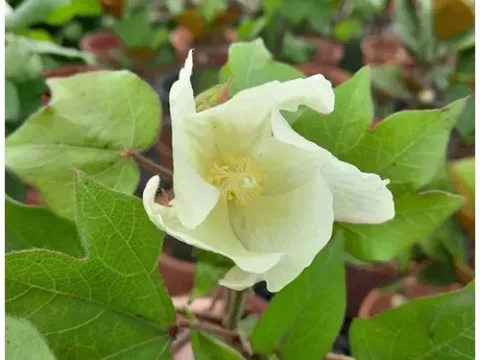
Gossypium pulchellum
Gossypium pulchellum
Gossypium pulchellum belongs to the Malvaceae family and requires precise environmental management for successful cultivation. Planting is typically scheduled when soil temperatures consistently reach 15 degrees Celsius to ensure rapid germination and reduce the risk of seed decay.
What the section contains
Gossypium pulchellum
Proper seedbed preparation is vital, involving deep tillage to break up soil compaction and facilitate root penetration. Uniform planting depth is essential for ensuring simultaneous emergence across the entire field, which simplifies subsequent management tasks.
In modern agricultural systems, precision planting technology is used to maintain optimal plant density. This spacing is crucial to provide adequate air circulation, which helps in preventing moisture-related fungal infections within the canopy.
Seed treatment with fungicides and protective coatings is a standard practice to shield emerging seedlings from soil-borne pathogens. This stage is critical for establishing a healthy crop stand that can reach full production potential.
Regional variations in climate necessitate precise timing; planting too early may expose crops to chilling injuries, while late planting risks exposing the fiber development phase to autumn rains or early frost.
Cotton crops demand high heat accumulation, requiring a long growing season with consistent temperatures between 25 and 35 degrees Celsius. They are highly heliophilous and thrive in regions with intense solar radiation and clear skies.
Water management is the most important factor in production. The crop requires substantial moisture during the flowering and boll-filling stages, though it is drought-tolerant once the root system is well-established.
Soil quality should be high, with well-drained, fertile substrates that support deep root development. Sandy loams or alluvial soils are preferred, as they allow for effective water percolation and prevent waterlogging around the root zone.
Nutrient management focuses on nitrogen for vegetative growth, while phosphorus and potassium are essential for flower bud formation and fiber strength. Soil testing is required to maintain the right nutrient balance throughout the cycle.
Wind protection is beneficial as strong gusts can cause lodging or mechanical damage to the bolls. In many regions, the planting of windbreaks is a standard agronomic practice to improve the microclimate of the field.
Yield components in cotton include the number of fruiting branches per plant, the number of bolls set, and the weight of lint per boll. High-yielding varieties are selected based on their performance under specific local environmental conditions.
Efficient irrigation scheduling and nutrient application significantly boost the output. Modern agronomy often utilizes moisture sensors and plant analysis to determine exactly when and how much to apply, maximizing the fiber quality.
Defoliation techniques are employed before harvest to clear the plants of leaves, ensuring cleaner lint and faster drying of the remaining bolls. This practice is essential for mechanical harvesting efficiency.
Harvesting strategies vary based on the scale of production, with automated systems significantly improving labor productivity. The timing of the harvest is critical to maintain the grade and market value of the cotton fiber.
Continued improvement in crop genetics seeks to enhance tolerance to environmental stressors such as soil salinity, which has historically been a significant barrier to maintaining stable yield targets.
The crop is vulnerable to various pests, most notably the cotton bollworm, which feeds on the developing bolls, directly reducing the harvestable crop. Integrated Pest Management (IPM) is essential to control these threats sustainably.
Fungal diseases like Verticillium wilt can devastate a field by clogging the plant's vascular system. Management relies on rotation, resistant varieties, and rigorous field sanitation to prevent the spread of the soil-borne pathogen.
Spider mites are another major threat, especially in hot, dry periods. They colonize the leaves, leading to reduced photosynthetic capacity and overall crop decline if not addressed promptly with acaricides.
- Cotton bollworm
- Spider mites
- Verticillium wilt
- Bacterial blight
- Root rot
The use of biological controls, such as predatory insects and entomopathogenic fungi, is increasing in cotton farming as an effective way to minimize the environmental impact of synthetic pesticides.
Harvesting commences when a sufficient percentage of bolls have opened naturally, exposing the fluffy lint. Farmers must target dry periods to perform the harvest to ensure the highest grade and fiber quality.
Mechanical pickers are standard in modern operations, designed to remove the lint while leaving the hulls and leaves behind. Proper maintenance of this equipment is necessary to minimize lint contamination during the collection process.
Following harvest, the raw cotton (seed cotton) is moved to ginning facilities where the seeds are separated from the fiber. This process is the final step in the agricultural production phase before industrial textile use.
Storage of the gathered cotton requires dry, well-ventilated conditions to prevent discoloration and mold growth. Compressed bales must be kept off the ground and protected from ambient humidity.
Logistics planning ensures that harvested material is ginned promptly. Delays in this process can negatively impact the fiber quality, reducing its value in the global market due to potential moisture buildup.