
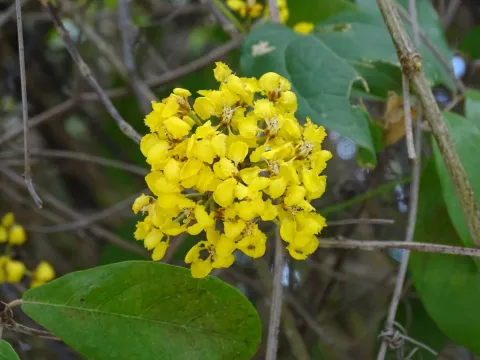
Hiraea
Hiraea
Hiraea is a diverse genus of woody vines, shrubs, and small trees belonging to the Malpighiaceae family. These plants are native to the tropical and subtropical regions of the Americas, where they are typically found in humid forest environments and disturbed secondary growth areas.
What the section contains
Hiraea
The cultivation of Hiraea requires a stable, warm climate throughout the year, with temperatures consistently staying above 18-20°C. These plants thrive in high humidity environments and require adequate protection from cold winds or frost, which are detrimental to their structural integrity.
Soil requirements focus on high organic matter content and excellent drainage. They prefer well-aerated sandy loam soils that prevent waterlogging. Providing a sturdy support structure is essential, as the climbing habit of most Hiraea species requires a scaffold for healthy canopy development.
Botanically, the plants are characterized by opposite, simple leaves and bright yellow, radial flowers arranged in axillary inflorescences. Their fruit, typically in the form of samaras (winged seeds), is an evolutionary adaptation that facilitates efficient dispersal via wind gusts within the canopy layers.
In terms of human use, the genus is primarily valued for ornamental purposes in tropical landscaping, where it is used to cover fences, walls, and arbors. Beyond aesthetics, ongoing research investigates the chemical constituents of Hiraea for potential applications in natural product chemistry.
Disease management in Hiraea focuses on preventing fungal pathogens such as leaf spot and mildew. These conditions are typically exacerbated by poor air circulation and excessive foliage density, necessitating regular pruning and thinning of the plant structure to ensure proper ventilation.
Insects like aphids, whiteflies, and scale insects are the most common pests impacting these plants. Their feeding habits can weaken the vine and result in the production of honeydew, which further encourages the growth of sooty mold on the foliage surface.
Spider mites are a particular concern during dry seasons, as they quickly colonize the undersides of leaves, causing stippling and eventual defoliation if left untreated. Frequent misting and the maintenance of adequate soil moisture can help deter these infestations.
Nutrient deficiencies, particularly involving iron and magnesium, can occur if the soil pH deviates from the preferred slightly acidic range. Regular soil testing and the application of micronutrient supplements are recommended to maintain vibrant foliage and robust growth.
Integrated pest management protocols, including the introduction of natural predators or the use of neem-based oils, are preferred over synthetic pesticides. This ensures the long-term sustainability of the planting and protects the local ecosystem surrounding the vines.