
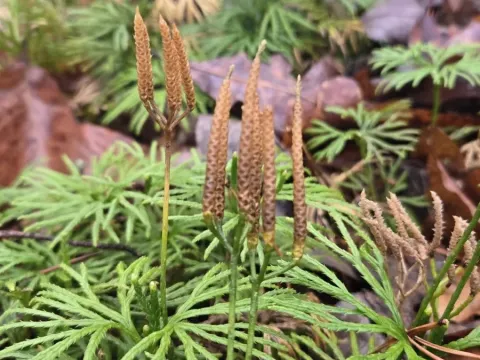
Diphasiastrum
Diphasiastrum
Diphasiastrum is a genus of perennial, evergreen, spore-bearing vascular plants belonging to the Lycopodiaceae family. These plants are often colloquially referred to as clubmosses or ground-cedars due to their morphology and historical classification.
What the section contains
 Alpine clubmoss
Diphasiastrum alpinum
Alpine clubmoss
Diphasiastrum alpinum
 Blue clubmoss
Diphasiastrum tristachyum
Diphasiastrum kablikianum
Diphasiastrum kablikianum
Blue clubmoss
Diphasiastrum tristachyum
Diphasiastrum kablikianum
Diphasiastrum kablikianum
 Diphasiastrum madeirense
Diphasiastrum oellgardii
Diphasiastrum oellgardii
Diphasiastrum madeirense
Diphasiastrum madeirense
Diphasiastrum oellgardii
Diphasiastrum oellgardii
 Ground cedar
Diphasiastrum complanatum
Ground cedar
Diphasiastrum complanatum
 Issler's Clubmoss
Diphasiastrum issleri
Issler's Clubmoss
Diphasiastrum issleri
 Zeiller's clubmoss
Diphasiastrum zeilleri
Zeiller's clubmoss
Diphasiastrum zeilleri
Diphasiastrum
The geographic distribution of Diphasiastrum covers a wide range of temperate and subarctic regions in the Northern Hemisphere. They thrive in forest environments, typically inhabiting acidic and well-drained soils found under coniferous or mixed forest canopies.
The biology of Diphasiastrum is strictly dependent on a complex symbiotic relationship with specific soil fungi. This mycorrhizal association is essential for the germination of spores and the subsequent development of the subterranean gametophyte stage.
The plant requires stable environmental conditions, characterized by moderate humidity and filtered light. Exposure to direct, intense sunlight or highly disturbed soil conditions typically results in the decline of the plant population, as it cannot compete with rapid-colonizing flora.
Regarding cultivation, Diphasiastrum is not used in modern agriculture. Its extremely slow growth rate and strict environmental requirements make it an unsuitable candidate for commercial cultivation, focusing instead on its role in forest biodiversity and conservation.
The most significant threat to Diphasiastrum populations is habitat loss caused by deforestation and industrial forest management. The destruction of the soil layer effectively destroys the delicate mycorrhizal networks necessary for the plant's survival.
Soil compaction, resulting from forestry activities or heavy human traffic in recreational areas, significantly hinders the propagation process. Once the delicate surface vegetation is crushed, the plant struggles to re-establish due to its slow rate of vegetative spreading.
Altered drainage patterns within forest ecosystems pose another major threat. Since Diphasiastrum prefers consistent moisture, any change in the water table can cause desiccation and the eventual death of established colonies.
Increased levels of air and soil pollution, particularly the deposition of nitrogenous compounds, can alter the fungal communities in the soil, indirectly affecting the health and growth potential of the Diphasiastrum plants.
Climate change poses a long-term risk, as shifts in seasonal moisture and temperature patterns affect the fragile balance of the microclimate in which these plants have evolved over centuries.