
Alpine clubmoss
Diphasiastrum alpinum
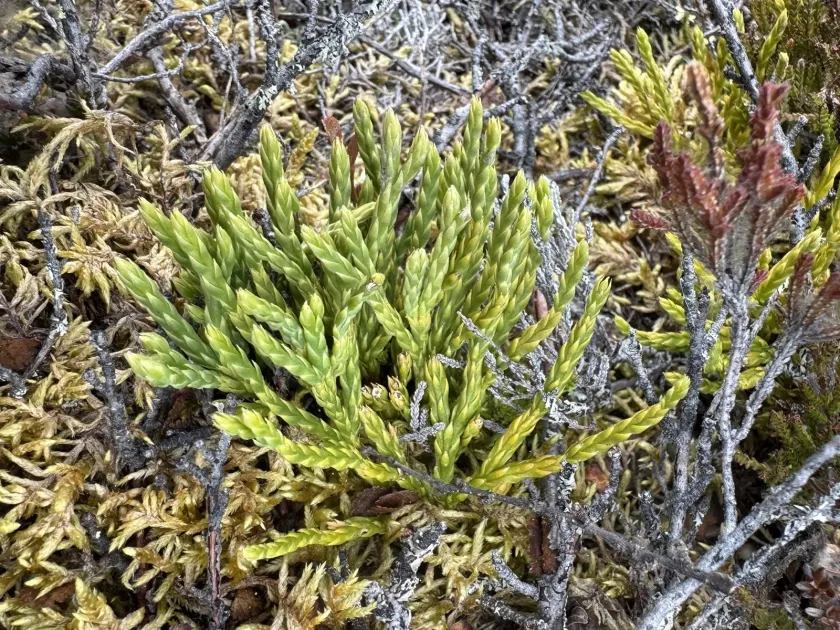
Description
Growing requirements
Alpine clubmoss, scientifically known as Diphasiastrum alpinum, belongs to the family Lycopodiaceae. It is a perennial, evergreen vascular plant that propagates via spores and spreads through creeping rhizomes.
The plant features distinct leaves arranged in four rows, giving its branches a flattened appearance. This structural adaptation allows it to survive in harsh mountain environments, protecting it from strong winds and heavy snow cover.
The species requires specific environmental conditions to thrive, including acidic, well-drained soils and high humidity. It is typically found in alpine meadows, mountain ridges, and subarctic regions across the Northern Hemisphere.
Temperature is a critical factor for its survival. As a cold-adapted species, it struggles in lowland conditions where heat stress and competing vegetation often overwhelm its slow-growing stems.
Successful cultivation is extremely difficult because the plant relies on a symbiotic relationship with soil fungi. Without these fungi, spore germination and subsequent growth in a garden or field setting are nearly impossible.
Harvesting
The economic utility of Alpine clubmoss is minimal in contemporary agriculture. The plant is not considered a crop, and there are no commercial varieties developed for large-scale production or consumption.
Historically, the plant was collected for minor medicinal uses or local crafts, but these practices have largely ceased due to conservation efforts. In many parts of its range, the species is protected by regional environmental laws.
The slow growth rate of the plant—often only a few centimeters of extension per year—makes it highly susceptible to harvesting pressure. Sustainable harvest is practically non-existent for this species.
Research on this plant is primarily focused on ecology and botany rather than agriculture. Scientists study its colonization patterns to monitor the health of high-altitude ecosystems and the impact of climate change on mountain flora.
Future potential for this plant might lie in specialized landscaping for rock gardens, provided that the necessary soil fungal cultures are introduced to ensure survival. Currently, it remains a wild plant primarily of interest to botanists and conservationists.