
Blue clubmoss
Diphasiastrum tristachyum
Description
Growing requirements
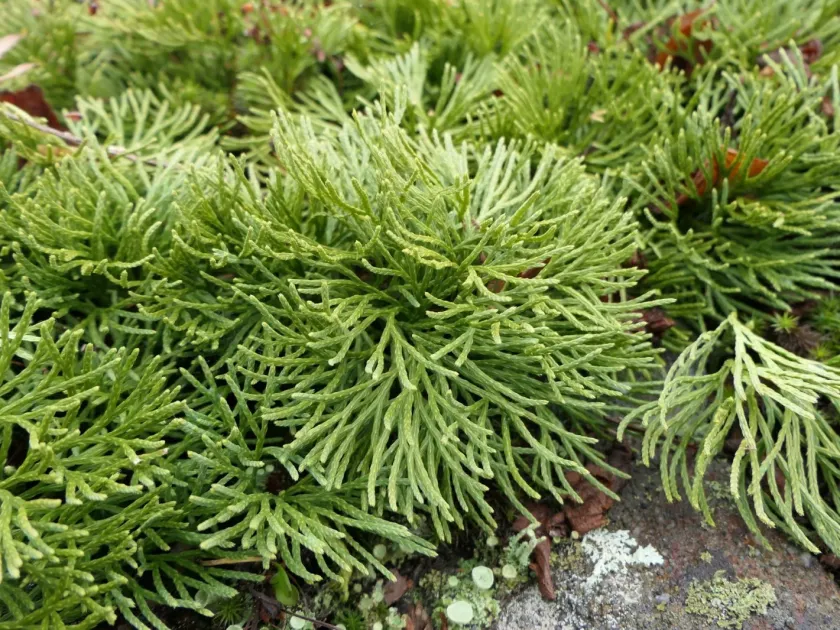
Blue clubmoss (Diphasiastrum tristachyum) is a perennial, evergreen vascular plant belonging to the Lycopodiaceae family. It is distinct for its complex, creeping rhizome system and upright, fan-like branches that provide a unique structure.
This species thrives primarily in acidic, nutrient-poor, sandy soils found in open pine forests or heathlands. It is highly sensitive to soil compaction and competition, requiring stable, undisturbed habitats to maintain its slow-growing populations.
The distribution of the species encompasses the northern temperate zones of Europe and North America. It is often found in areas that experience cold winters and moderate humidity, though it prefers well-drained ground to prevent fungal decay of the rhizomes.
Morphologically, the plant is identified by its scale-like leaves and specific reproductive structures. The spores are contained within strobili, which are typically organized in sets of three on long stalks, giving the plant its distinct Latin specific epithet.
From an agricultural standpoint, it is not considered a cultivated crop. Due to its conservation status in many regions and the extremely slow rate of colonization, it is strictly managed as a wild plant species rather than an economic commodity.