
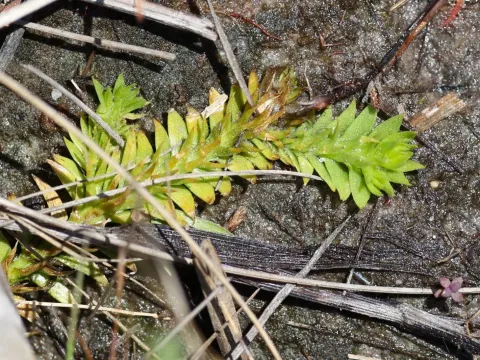
Pseudolycopodiella
Pseudolycopodiella
Pseudolycopodiella is a genus of lycophytes belonging to the Lycopodiaceae family. These plants are characterized by their creeping growth habit and a strong affinity for moist, acidic environments, distinguishing them within the clubmoss group.
What the section contains

Pseudolycopodiella
The geographic distribution of Pseudolycopodiella spans across various climatic zones, with a notable presence in both tropical regions and some temperate areas. They are primarily found in marshes, wetlands, and other habitats where water saturation is consistent throughout the year.
Successful growth of these plants is strictly dependent on soil acidity and high levels of moisture. They are highly sensitive to soil composition and do not tolerate high concentrations of synthetic fertilizers, which is why they are not cultivated as traditional agricultural crops.
Botanically, the plant features horizontal stems that often root at the nodes. This structural adaptation allows it to colonize wet, unstable soil surfaces, forming dense mats that contribute to the stability of the substrate and the local micro-ecosystem.
While not an agricultural crop in the economic sense, Pseudolycopodiella serves as an important bio-indicator for healthy wetland ecosystems. Preservation of their habitat is crucial for maintaining regional flora diversity and studying the evolution of ancient spore-bearing plant lineages.