
Zeiller's clubmoss
Diphasiastrum zeilleri
Description
Growing requirements
Diphasiastrum zeilleri, commonly known as Zeiller's clubmoss, is a perennial evergreen spore-bearing plant belonging to the Lycopodiaceae family. It is not an agricultural crop but a significant botanical species often studied for its hybrid origin and evolutionary biology.
The plant grows primarily in acidic, nutrient-poor soils within temperate forest ecosystems. It thrives in open woodlands or heathlands where soil conditions support specific symbiotic fungi essential for the germination of its spores and subsequent development.
Geographically, it is found across parts of Europe, typically occurring where parental species overlap. Its environmental requirements are strict, making it a bioindicator of healthy, undisturbed forest environments.
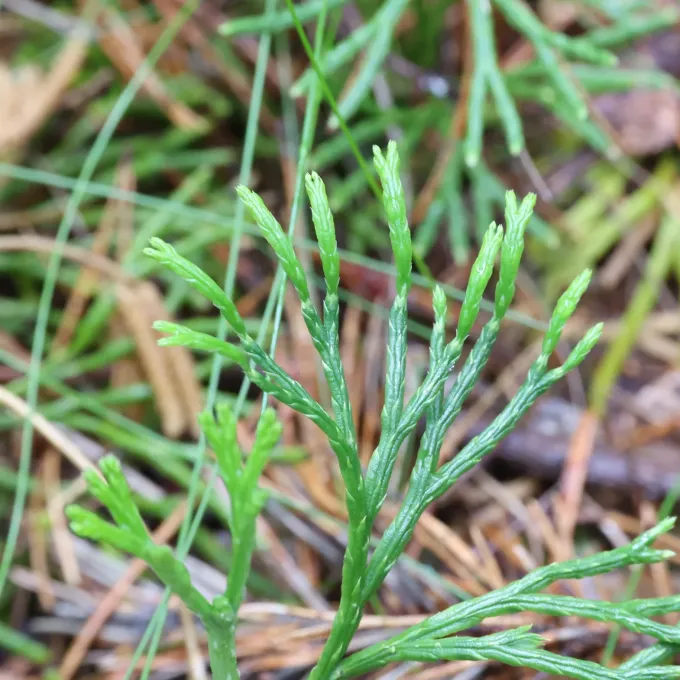
The plant features long, creeping stems with upright branches covered in scale-like leaves. Its growth rate is exceptionally slow, and it relies heavily on underground subterranean gametophytes that must establish a mycorrhizal association to survive.
There is no industrial or agricultural use for this plant. It is considered a protected species in many regions, and its conservation is vital for maintaining forest biodiversity rather than for commercial production.
Main diseases and pests
The primary threats to this species include habitat loss due to deforestation, urbanization, and changes in land use that disrupt the delicate soil fungal networks it depends on.
Pathogenic fungi can cause root rot, especially in stagnant or over-saturated soil conditions, which frequently leads to the death of local patches of the clubmoss.
Invertebrate pests that consume the strobili (spore-bearing cones) limit the plant's ability to reproduce, which is already naturally low due to its complex lifecycle.
Recreational activities such as hiking or off-trail traffic cause mechanical damage, crushing the fragile stems and preventing recovery for several growing seasons.
Climate change, specifically rising temperatures and unpredictable precipitation patterns, challenges the plant’s moisture requirements, threatening the survival of its vulnerable prothalli.