
Chaste tree
Vitex agnus-castus L.
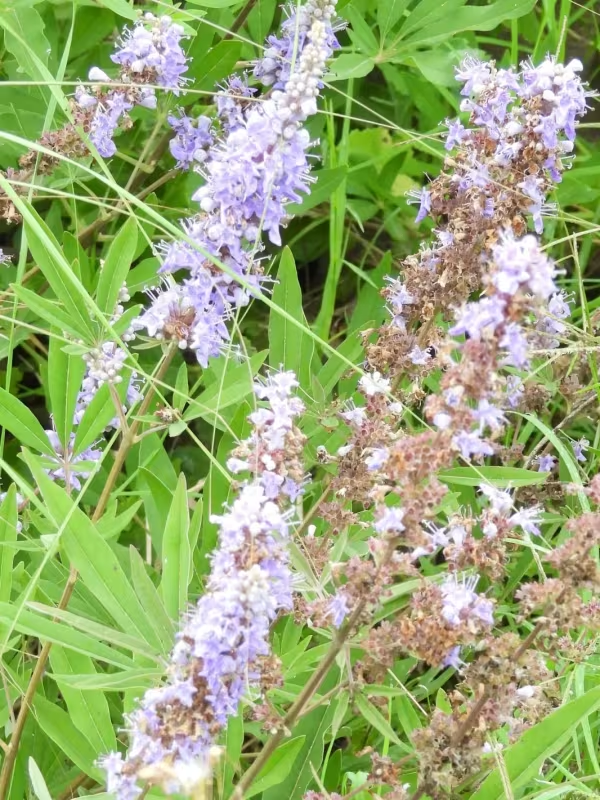
Description
Sowing dates
Vitex agnus-castus can be propagated through seeds or cuttings; seeds require cold stratification for at least one month to break dormancy and improve germination rates.
For vegetative propagation, softwood or hardwood cuttings are taken during the active growing season and placed in a rooting medium under mist conditions.
Spring planting is recommended once the danger of frost has passed to allow the young root system to establish before the onset of the next winter season.
Proper spacing is crucial in commercial production to ensure adequate airflow and sunlight penetration for all parts of the shrub, typically 1.5 to 2 meters apart.
Seedlings need consistent moisture during their initial establishment phase, but once mature, the plant demonstrates improved tolerance to drier soil conditions.
Growing requirements
The chaste tree belongs to the Lamiaceae family and is native to Mediterranean regions, thriving in temperate to subtropical climates with long, sunny summers.
The plant demands full sun exposure to maximize the production of essential oils and secondary metabolites within its flowers and ripening fruits.
Well-drained, slightly alkaline to neutral soil types are preferred; the plant does not tolerate waterlogged conditions which can lead to root system degradation.
While the chaste tree is somewhat drought-resistant once established, irrigation is necessary during the peak flowering and fruit-setting stages for optimal yields.
Protection from severe frost is essential in cooler regions, as extreme cold can cause dieback in the younger, less lignified branches of the shrub.
Yield
The economic value of this crop is primarily derived from its dried fruits, which are processed for the pharmaceutical industry due to their hormone-balancing properties.
Yield stability is achieved through consistent pruning practices, which encourage the growth of new wood and prevent the shrub from becoming overgrown or unproductive.
Annual output depends on the plantation age and local climate, with harvest cycles often peaking as the shrub reaches its five-year mark of maturity.
Maintaining high standards of horticultural practice ensures that the bioactive compounds, such as aucubin and casticin, remain at desired levels for extraction.
Quality control during the harvesting and processing phases is vital to ensure that the final dried product meets international medicinal safety standards.
Main diseases and pests
Vitex agnus-castus is generally resistant to many pests, but it remains susceptible to aphids and spider mites during hot and dry summer intervals.
Root rot caused by Phytophthora species may occur if the soil drainage is inadequate or if the field is situated in an area prone to standing water.
Fungal diseases like powdery mildew can affect the foliage in humid environments, necessitating proper canopy management to improve air circulation.
Integrated pest management strategies are recommended to minimize the reliance on chemical pesticides and protect the ecological health of the plantation.
Regular monitoring for signs of stress or nutrient deficiency allows for early intervention, ensuring the long-term vitality of the medicinal crop.
Harvesting
Harvesting of the fruit occurs in late autumn when berries have turned dark brown or black and have reached their full state of physiological maturity.
Careful handling during harvest is necessary to prevent mechanical damage to the delicate seeds and to ensure that no extraneous plant material is collected.
The berries must be dried immediately after collection using controlled airflow and heat to prevent the growth of mold and undesirable fermentation processes.
Post-harvest processing involves cleaning and sorting the fruits to remove debris, ensuring the purity of the raw material before it is shipped for extraction.
Storage should be conducted in cool, dry, and dark environments to preserve the chemical integrity of the volatile compounds found in the dried fruits.