
Vitex pseudonegundo
Vitex pseudonegundo (Hausskn.) Hand.-Mazz.
Description
Growing requirements
Vitex pseudonegundo is a perennial deciduous shrub belonging to the Lamiaceae family, known for its remarkable resilience and adaptability to arid environments. This species is closely related to Vitex agnus-castus and shares many of its biological advantages in challenging climates.
The plant originates from the dry regions of Central and Western Asia, where it thrives along riverbanks and rocky, sun-exposed slopes. Its natural habitat is characterized by extreme temperature fluctuations, allowing the plant to develop high tolerance to heat and solar exposure.
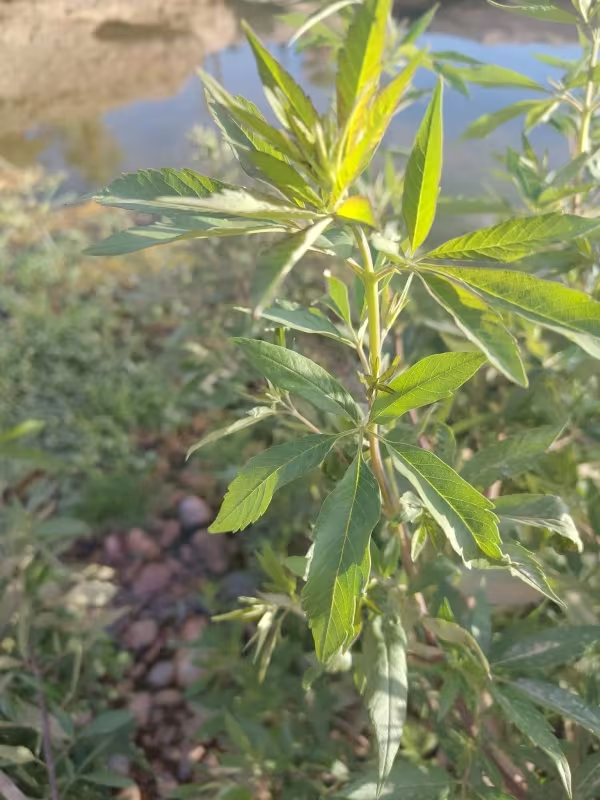
Botanically, it is distinguished by its palmately compound leaves, which are typically covered with dense, grayish hairs. This pubescence is an adaptive feature that reduces water loss through transpiration, making the plant highly efficient under water-stressed conditions.
For agricultural cultivation, it requires well-drained, porous soils with a neutral to slightly alkaline pH. Planting in full sun is essential, as the species does not tolerate shade and will become straggly or lose vigor if deprived of sufficient direct light.
General maintenance involves minimal irrigation once the plant is established. However, young plants require a consistent watering schedule until their root systems are deep enough to access subsurface moisture. Pruning should be done in early spring to encourage dense growth and flower production.
Main diseases and pests
Due to the presence of secondary metabolites and essential oils, Vitex pseudonegundo exhibits natural resistance to many common garden pests. Its strong scent and chemical profile act as a deterrent, reducing the need for intensive pest control measures.
Root rot remains the primary threat, usually associated with poorly drained soils or excessive irrigation during the dormant season. Ensuring that the site has excellent drainage is the most effective preventative measure against these soil-borne pathogens.
In cases of poor airflow or high humidity, powdery mildew may develop on the foliage. Proper spacing during planting is critical to maintain air circulation around the canopy, which significantly lowers the likelihood of fungal outbreaks throughout the growing season.
Spider mites can occasionally colonize the undersides of leaves during prolonged heatwaves. If identified early, these can be managed by increasing ambient humidity or utilizing eco-friendly horticultural oils, which are generally safe for the plant.
Integrated pest management strategies are recommended over chemical intervention to maintain the plant's health and utility. Regular monitoring for signs of stress or pest activity allows for timely and targeted interventions before infestations become significant.