
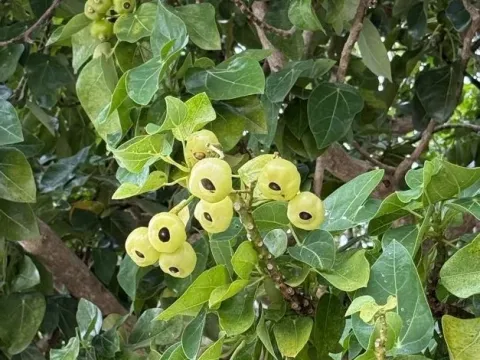
Hernandia nymphaeifolia
Hernandia nymphaeifolia
Hernandia nymphaeifolia, belonging to the Hernandiaceae family, is a distinct evergreen tree primarily found in the coastal regions of the Indo-Pacific area.
What the section contains
Hernandia nymphaeifolia
Originating from tropical island environments, the species is perfectly adapted to sandy, well-drained soils and high-salinity coastal conditions where other crops struggle.
The botanical structure is characterized by large, glossy, peltate-cordate leaves that provide excellent shade, making it a robust canopy tree in its native habitat.
Cultivation requirements include a consistent tropical climate with high humidity and protection from freezing temperatures, which can severely damage or kill the plant.
The plant demonstrates high tolerance to salty winds and spray, which defines its successful placement in coastal agroforestry projects and beach stabilization efforts.
Economically, the tree is utilized for its lightweight, soft wood, which is often used for carving, handicrafts, and basic local construction purposes.
The fruit of Hernandia nymphaeifolia serves an ecological role, as it is dispersed by ocean currents, aiding the natural expansion of coastal forests.
Some communities explore the medicinal potential of its leaves and seeds, though these applications are traditionally rooted and require modern scientific validation.
As an agricultural asset, it is highly valued for preventing soil erosion in sensitive coastal zones, offering long-term ecological yield and landscape preservation.
The tree's capacity for growth in nutrient-poor beach sands makes it a unique candidate for reforestation in degraded coastal ecosystems.
Primary threats to the species include root rot pathogens, which often thrive if the soil drainage is compromised by improper irrigation or landscape changes.
Insect pests, such as leaf-feeding larvae and sap-sucking insects, may pose a risk to young saplings in nurseries, requiring constant monitoring during early development.
Fungal leaf spot diseases can emerge in plantation settings if air circulation is restricted, potentially reducing the overall vigor of the tree stand.
Effective pest management relies on early detection and maintaining ecological balance, avoiding broad-spectrum pesticides that could harm coastal water quality.
Sanitation practices, such as removing debris and infected parts, remain the most effective preventive measures against the spread of pests and diseases.