
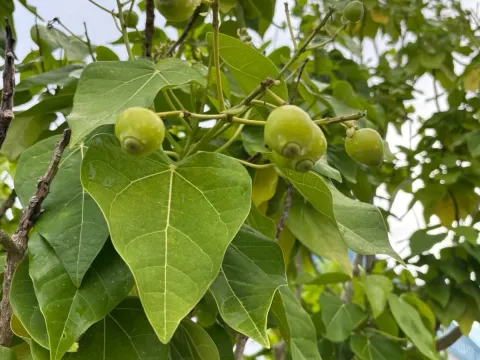
Hernandia
Hernandia L.
Hernandia is a genus of flowering plants belonging to the Hernandiaceae family, comprising various species of evergreen trees and shrubs. These plants are primarily native to the tropical regions of the world, often found in coastal forests and humid environments.
What the section contains

Hernandia
The climate requirements for Hernandia are strictly tropical. They thrive in warm conditions where temperatures remain consistent throughout the year, and they are highly sensitive to frost or prolonged exposure to cold temperatures.
Regarding soil, these plants require well-draining, nutrient-rich soil that allows for healthy root development. Because they naturally occur in environments with frequent rainfall, they are adapted to moisture but require good drainage to prevent the stagnation of water.
Agricultural practices for Hernandia focus on maintaining high soil humidity without causing saturation. While some species can tolerate partial shade, they generally prefer well-lit positions to maintain their growth rate and the health of their characteristic large leaves.
In terms of usage, the genus is utilized both for ornamental purposes in tropical gardens and for the light, soft wood that some species produce. Historically, the wood has been used for crafting light articles and floats in various maritime cultures.
The primary threats to the health of Hernandia plants involve fungal pathogens that flourish in stagnant, overly humid conditions, often leading to stem or root rot which can be fatal if not controlled.
Pest infestations, including various types of scale insects and spider mites, are common in captive or garden environments, causing leaf yellowing and structural damage to the foliage over time.