
Hemicarpha
Hemicarpha
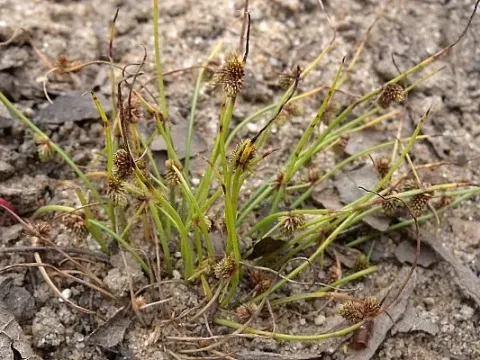
Hemicarpha is a genus of annual herbaceous plants belonging to the Cyperaceae family, often found in marshy or wetland environments.
What the section contains
Hemicarpha
While not typically grown as a commercial crop, it is studied for its role in wetland restoration and the maintenance of riparian ecological balance.
Sowing should take place in early spring when environmental conditions support germination in waterlogged or saturated substrate environments.
Seeds of Hemicarpha are minute and should be surface-sown to ensure they receive sufficient light and moisture contact to initiate the germination process successfully.
Strategic planting involves maintaining a consistent water level to prevent the desiccation of the shallow root systems during their early development.
The primary environmental requirement for Hemicarpha is constant moisture, as the plant naturally thrives in saturated silty or sandy soils along water edges.
Hemicarpha favors open, sunny sites, avoiding areas with dense shade where canopy cover would inhibit the growth and photosynthetic efficiency of the plant.
The plant is adapted to soils with varying acidity levels, preferring areas where the soil profile remains consistently moist throughout the growing cycle.
Optimal growth occurs in temperate climates where temperatures remain within a stable range, avoiding extreme heat or sudden frost events.
Agrotechnical maintenance includes monitoring soil mineral levels to ensure they do not reach concentrations that could hinder the plant's metabolic processes.
Pathogenic fungi can become a significant threat if water drainage is poor and stagnant conditions persist for an extended period, leading to root rot.
Herbivorous insects in wetland habitats may cause damage to the foliage, which can weaken the plant and reduce its ability to produce viable seeds.
Competition from more aggressive, fast-growing invasive species often represents a critical threat to the survival of Hemicarpha populations.
Pollution caused by agricultural runoff containing excess nitrogen or chemical residues can alter the local ecosystem and reduce plant vigor significantly.
Effective management requires clear identification of early signs of infestation and the maintenance of a balanced, non-polluted ecological environment.