
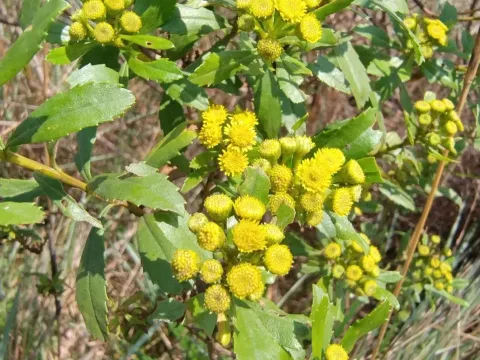
Heterothalamus psiadioides
Heterothalamus psiadioides
Heterothalamus psiadioides belongs to the Asteraceae family and is an interesting candidate for specialized agricultural cultivation in arid regions.
What the section contains
Heterothalamus psiadioides
Sowing should ideally occur in the spring, once soil temperatures are sufficient to support rapid seed germination and early seedling development.
The seeds often benefit from pre-sowing treatments, such as cold stratification, which helps to break dormancy and improves overall uniformity in the field.
Vegetative propagation via cuttings is frequently employed in commercial settings to ensure genetic stability and reduce the time required to establish a productive stand.
Spacing is critical for this species to ensure adequate airflow and sunlight penetration, which helps in preventing fungal diseases in the dense foliage.
The species is naturally adapted to well-drained, sandy, or rocky soil profiles, thriving where other conventional crops might struggle due to nutrient limitations.
It exhibits remarkable drought resistance, making it an excellent choice for sustainable agriculture in areas prone to water scarcity.
High levels of solar radiation are required to maximize the plant's production of secondary metabolites, which are highly valued in the medicinal industry.
Waterlogging must be avoided at all costs, as the roots are particularly susceptible to rot when kept in consistently damp or saturated conditions.
The plant demonstrates good tolerance to temperature fluctuations, which is common in the mountainous or highland regions of its native distribution.
Yield estimation is based on the harvest of the aerial parts, which are systematically collected for their pharmacological and essential oil content.
With proper management, including weed control and strategic fertilization, farmers can achieve stable yields of biomass throughout the plant's life cycle.
Peak production usually occurs between the third and fourth years, after which the plants may show signs of senescence and reduced chemical concentration.
Regular maintenance ensures that the biomass remains free of foreign material, which is essential for achieving high market quality for raw herbal ingredients.
Economic viability is supported by the plant's long-term survival and potential for multiple harvests per season if conditions remain favorable.
Fungal pathogens represent the most significant threat to the crop, especially if the plants are grown in conditions with poor drainage or stagnant air.
Various insect pests, including aphids and leaf-eating beetles, can reduce photosynthetic efficiency and overall plant vigor if left unchecked.
Preventive measures include implementing strict field sanitation and ensuring that planting densities allow for proper drying of dew after rainfall.
Integrated pest management strategies are recommended to keep damage below economic thresholds without relying solely on chemical interventions.
Early identification of signs such as discoloration or wilting is key to managing health issues before they spread throughout the entire plantation.
Harvesting is typically timed to coincide with the onset of flowering, as this stage correlates with the highest concentration of active compounds.
Mechanized harvesting tools or manual shears should be sharp and sanitized to ensure clean cuts that promote rapid plant recovery post-harvest.
After collection, biomass should be processed immediately to prevent oxidation and to preserve the volatile essential oils that give the plant its value.
Drying must take place in a shaded, well-ventilated environment to prevent heat-induced degradation of the delicate phytochemical profile.
Proper storage post-harvest ensures that the dried product retains its quality for long-term transport and industrial utilization.