
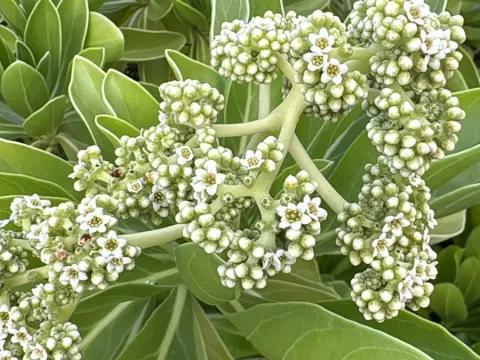
Heliotropium arboreum
Heliotropium arboreum
Heliotropium arboreum, commonly known as the silver heliotrope, is an evergreen shrub in the Boraginaceae family. In the wild, it reproduces primarily through seeds that are dispersed by ocean currents, allowing it to colonize sandy coastal environments.
What the section contains
Heliotropium arboreum
When cultivating, seeds are sown in a light, well-draining sandy substrate. Maintaining a high ambient temperature, ideally between 25 and 30 degrees Celsius, is essential for achieving successful germination rates.
The seeds require consistent, though not excessive, moisture during the initial phases of growth. Using sterilized containers and high-quality potting mixes helps prevent damping-off, a common issue in tropical plant propagation.
Once seedlings develop their first set of true leaves, they should be transplanted into larger individual pots. Adequate spacing is necessary to ensure each plant receives maximum sunlight, which is critical for strong development.
Proper ventilation during the seedling stage is important to mimic natural outdoor conditions and strengthen the structural integrity of the young stems.
This species is highly heliophilic and requires full, direct sun exposure for most of the day. Inadequate light levels lead to etiolation and the loss of the plant's characteristic silvery pubescence on the foliage.
The soil must be sandy and porous with excellent drainage capabilities. The plant thrives in poor, rocky or alkaline soils and does not require high levels of organic matter, which can often lead to root rot.
Heliotropium arboreum is renowned for its high salt tolerance, making it an excellent choice for stabilizing coastal dunes and landscaping areas exposed to saline spray. It is also highly adapted to periods of severe drought.
As a tropical shrub, it is sensitive to cold. Temperatures must remain consistently above 15 degrees Celsius. Frost is lethal to this plant, meaning it must be protected or grown indoors in cooler temperate climates.
Watering should be deep but infrequent, allowing the soil to dry out between sessions. Over-watering, especially in cooler conditions, is the most common cause of failure when cultivating this species.
The plant is relatively resistant to pests due to its tough, hairy leaves; however, it can occasionally be attacked by aphids or scale insects. Monitoring the undersides of the leaves is recommended for early detection.
Fungal pathogens represent the biggest threat to the health of the plant, especially in high-humidity environments with stagnant air. Root rot is a common occurrence if drainage requirements are not strictly met.
Leaf spot diseases may appear if the foliage remains wet for extended periods. Ensuring good airflow around the canopy helps minimize the risk of bacterial and fungal infections significantly.
In some regions, leaf-eating caterpillars may cause minor damage to the younger, more succulent leaves. Manual removal or biological controls are usually sufficient for managing such localized infestations.
Preventative measures include regular sanitation of the growing area and the removal of any decaying plant material, which can serve as a breeding ground for potential pests or diseases.
The primary use of Heliotropium arboreum is in landscaping, specifically for creating windbreaks and ornamental hedges in seaside gardens. Its silvery appearance adds a unique texture to coastal planting schemes.
Harvesting seeds for nursery propagation is done by collecting mature fruits after they darken. The seeds must be dried properly in a cool, shaded area before storage to maintain long-term viability.
Occasional pruning is necessary to maintain a tidy shape and to encourage denser foliage growth. This practice also helps in removing any deadwood that may harbor pests or pathogens.
While not a traditional agricultural crop, the plant is harvested in some areas for its ornamental potential. Nurseries supply these plants to municipalities for erosion control and beach beautification projects.
Ongoing care involves monitoring growth and adjusting nutrient inputs, though the plant requires very little fertilization. A slow-release fertilizer used sparingly during the active growth phase is usually sufficient.