
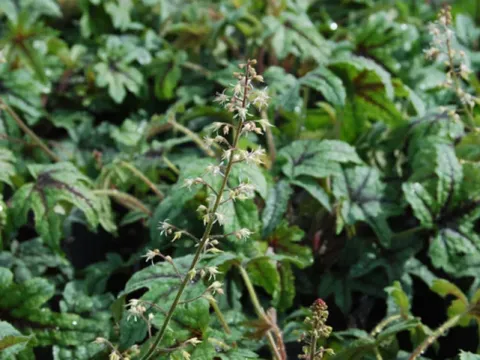
Heucherella
Heucherella
Heucherella is an intergeneric hybrid resulting from a cross between Heuchera and Tiarella, belonging to the Saxifragaceae family. This perennial plant is highly valued for its striking foliage, which often features intricate veining and dramatic color patterns.
What the section contains
Heucherella
The plant thrives in partial shade, where it receives gentle morning light but is protected from the harsh afternoon sun. Intense, direct sunlight can scorch the leaves, so positioning the plant under a canopy or on the north side of a garden is ideal for optimal health.
Soil requirements for Heucherella include well-drained, humus-rich, and slightly acidic to neutral soil. Because the root systems can be sensitive to waterlogging, it is essential to ensure that the planting site has excellent drainage to prevent rot.
Agrotechnical management involves maintaining consistent soil moisture. During dry spells, regular watering is necessary; however, overhead watering should be avoided to prevent moisture from sitting on the leaves, which can promote fungal growth.
These plants are primarily used in landscaping for shade gardens, ground covers, and container arrangements. Their ability to retain their foliage color for a significant portion of the season makes them a staple for creating textural contrast in border plantings.
The most significant threats to Heucherella are soil-borne diseases such as root rot and crown rot, primarily caused by improper drainage or excessive irrigation. These issues often lead to a rapid decline in the plant's vigor.
Pest issues include vine weevils, which can cause significant damage to the root system, and foliar nematodes that create discolored, distorted leaf spots. Slugs and snails may also graze on the tender foliage during cool, wet weather.
Cultural control is the most effective approach to managing these threats. Maintaining proper spacing ensures adequate airflow, which significantly reduces the humidity levels that favor fungal diseases and pathogen spread.
Sanitation practices, such as removing dead leaves in the spring and clearing surrounding debris, help minimize the habitats where pests and pathogens thrive. Early detection through regular inspections is key to preventing major infestations.
Chemical intervention should be considered a last resort. If pests persist, targeted applications of specific pesticides or nematicides should be applied strictly according to the manufacturer's recommendations to avoid collateral harm to beneficial garden insects.