
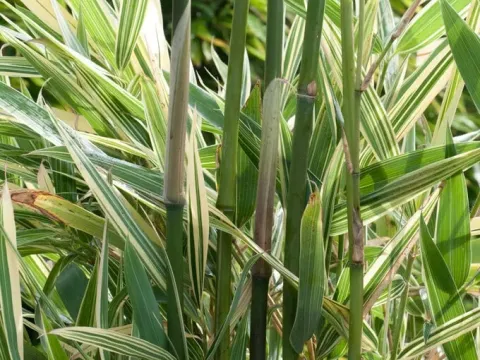
Hibanobambusa
Hibanobambusa
Hibanobambusa is a genus of perennial evergreen plants belonging to the Poaceae family, subfamily Bambusoideae. This plant is a recognized intergeneric hybrid originating from the genetic crossing of Sasa and Phyllostachys, resulting in a robust structure and specific foliage characteristics.
What the section contains
Hibanobambusa
The origin of the plant is linked to Japan, where it has been cultivated for both its ornamental value and structural properties. It is highly valued in horticulture for its relative cold tolerance, making it a preferred choice for temperate gardens compared to strictly tropical bamboo species.
Optimal growth requires rich, moisture-retentive, and well-draining soils with a neutral or slightly acidic pH level. While the plant can tolerate partial shade, exposure to direct sunlight generally results in denser foliage development and more vibrant leaf coloring.
The agricultural management of Hibanobambusa must include strict measures for containment. Due to its aggressive rhizome system, installing deep root barriers around the perimeter of the planting area is essential to prevent the plant from spreading into unwanted zones.
Regular watering is critical, particularly during the first years of establishment and throughout dry summer periods. Fertilizer application should focus on high nitrogen content in the early spring to promote vigorous culm growth throughout the main vegetative season.
Hibanobambusa is generally resistant to many common pests, yet poor cultural practices can lead to localized problems. Waterlogged soil conditions frequently cause root rot, necessitating immediate drainage improvements and the removal of affected rhizome segments.
Spider mites represent the most common pest threat, particularly in hot and dry climates. Integrated pest management, including periodic misting of the foliage and the application of mild acaricides, is often sufficient to keep populations under economic thresholds.
Fungal leaf spots may occur when humidity levels are excessively high and air circulation is poor. Thinning out the center of the bamboo stand to allow better airflow is a highly effective preventative measure against the spread of such fungal pathogens.
Small mammals, particularly rodents, can cause damage to the underground rhizomes during the winter months. Protective fencing and maintaining a clean area free of dense organic debris around the base of the plant help mitigate these risks.
Sanitation practices such as removing dead, damaged, or weak culms annually are vital for plant health. By clearing out the old wood, the grower reduces the habitat available for pests and improves the overall light exposure and aeration for new growth.