
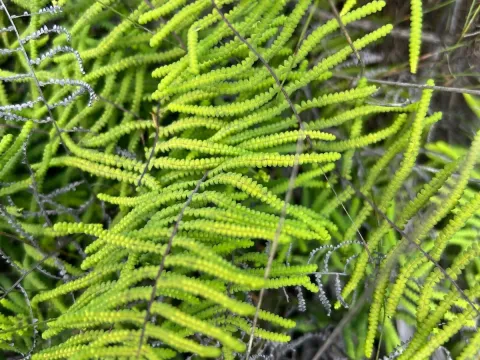
Gleichenia polypodioides
Gleichenia polypodioides
Gleichenia polypodioides is a distinctive fern belonging to the Gleicheniaceae family. It is a perennial plant characterized by its widespread creeping rhizomes and dichotomously branched fronds that can cover extensive areas in its natural habitat of Southern Africa.
What the section contains
Gleichenia polypodioides
In terms of habitat, this species thrives in acidic, moist, and well-drained soils. It is typically found in mountainous regions and forest fringes where it benefits from mist and frequent cloud cover, which maintains high atmospheric humidity.
For successful cultivation, the environment must mimic its natural ecological niche. This requires a stable, shaded location with high humidity and consistent moisture levels. The plant is particularly sensitive to substrate compaction and requires a light, organic-rich growing medium.
Temperature control is essential as the plant is not highly frost-tolerant. It prefers mild temperatures and dislikes intense heat combined with low humidity. Proper airflow is necessary to ensure that the fronds do not succumb to fungal pathogens.
While not a traditional food or industrial crop, Gleichenia polypodioides has significant value in botanical collections, restoration ecology, and specialized ornamental landscaping. Its ability to create dense vegetative mats makes it useful for soil protection in niche environments.
The primary threats to this fern include fungal infections such as root rot and leaf spot, which are frequently triggered by poor drainage or stagnant water conditions. Once established, these diseases can compromise the integrity of the rhizome network.
Insect pests such as spider mites and scale insects are common in controlled environments. These pests thrive in dry conditions and can cause significant damage to the fronds, leading to chlorosis and stunted development.
Managing these threats requires a proactive approach to sanitation and environmental monitoring. Ensuring adequate air circulation significantly reduces the risk of fungal outbreaks, while maintaining humidity deters spider mite infestations.
When chemical intervention is necessary, it is vital to choose products formulated for ferns, as they can be sensitive to heavy concentrations of active ingredients. Bio-based fungicides and horticultural oils are often preferred over broad-spectrum systemic pesticides.
The health of Gleichenia polypodioides is largely dependent on the quality of the substrate and the consistency of the microclimate. Regular monitoring for early signs of stress or pest colonization is essential for maintaining the vigor of the plant population.