
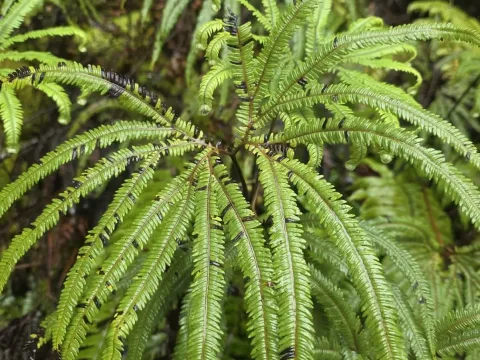
Sticherus
Sticherus
Sticherus is a genus of ferns within the Gleicheniaceae family, known for its distinctive dichotomous branching patterns. These ferns form dense, spreading colonies in their native habitats, contributing significantly to the understory vegetation of tropical forests.
What the section contains


Sticherus
The native distribution of these plants covers tropical and subtropical regions of the Southern Hemisphere, including South America, Australia, and various Pacific Islands. They thrive in environments that feature high precipitation and year-round moisture levels.
Cultivating Sticherus successfully requires a substrate that mimics its natural forest floor environment. It is essential to use a loose, well-draining, and acidic potting mix, typically composed of peat moss, perlite, and coniferous bark or sphagnum to maintain oxygenation.
Temperature management is crucial; the plant prefers a stable range between 18°C and 24°C. It is extremely sensitive to cold drafts and rapid temperature fluctuations, which can cause significant stress to the foliage and root system.
Proper lighting involves providing bright, indirect sunlight. While these ferns grow under forest canopies, they still require adequate light intensity for photosynthesis, but direct exposure to intense midday sun will cause leaf burn and dehydration.
Root rot is the most significant threat to Sticherus, almost always caused by improper irrigation practices. Maintaining saturated soil for extended periods deprives roots of oxygen, leading to rapid decay of the entire plant structure.
Spider mites are common pests that target Sticherus when humidity levels drop below the necessary threshold. These mites quickly weaken the plant by extracting fluids from the leaves, resulting in stunted growth and chlorotic appearances.
Mealybugs may establish colonies in the complex branching points of the fronds. Their presence is often detected by the white, cottony residue they leave behind, requiring immediate intervention with mild insecticidal soaps or horticultural oils.
Nutrient deficiencies or imbalanced soil pH can result in leaf chlorosis. It is vital to use fertilizers formulated for ferns, ensuring that the nitrogen, phosphorus, and potassium ratios are appropriate for delicate, shade-loving plants.
Fungal leaf spot diseases may appear if the plant is grown in areas with poor air circulation. To prevent these infections, growers must ensure a gentle airflow around the foliage while avoiding direct, cold breezes that the plant finds highly unfavorable.