
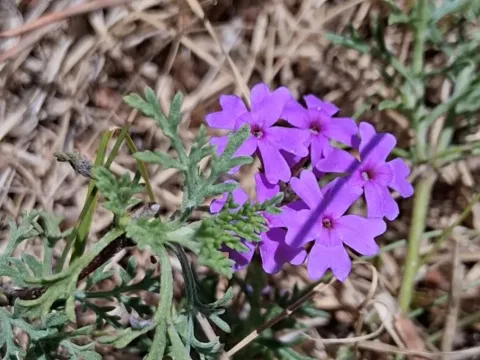
Glandularia pulchella
Glandularia pulchella
Glandularia pulchella, a member of the Verbenaceae family, is typically propagated via seeds started indoors. Sowing should occur in late winter or early spring to ensure the plants are well-established by the time the outdoor season begins.
What the section contains
Glandularia pulchella
Seeds require a high-quality, sterile growing medium for optimal germination. Keeping the substrate moist and at a consistent temperature of around 20 degrees Celsius is essential for uniform seedling emergence.
Pricking out the seedlings into individual pots is a necessary step once the first pair of true leaves appears. This process encourages the development of a robust root system, which is crucial for successful transplantation.
Hardening off the seedlings is required before they are moved to their permanent location in the garden. This process should take place over at least two weeks to allow the young plants to adjust to outdoor conditions.
Planting in the garden should only happen when all risks of frost have passed. Glandularia pulchella thrives when spaced appropriately, allowing for adequate airflow to prevent moisture-related issues.
Originating from South America, this plant is a true sun-lover. It requires at least six to eight hours of direct sunlight daily to produce the dense, vibrant blossoms that characterize the species.
The soil must be well-draining, as the plant is susceptible to root rot if left in waterlogged conditions. Sandy or loamy soils with moderate fertility are considered ideal for healthy growth.
While the plant shows good drought tolerance once established, it performs best with regular irrigation during dry spells. Avoid overhead watering to prevent leaf diseases and maintain foliage health.
Fertilization with a balanced, slow-release fertilizer at planting time, followed by liquid feeds during the flowering season, helps sustain the energy needed for constant bud production.
Maintenance, such as trimming back faded flower stems, is recommended to encourage secondary flushes of growth and blooms, keeping the plant tidy and productive throughout the season.
Powdery mildew is the most common fungal threat, particularly in humid or stagnant air conditions. Using fungicides and ensuring proper spacing between plants are effective preventative strategies.
Root rot is often a result of overwatering or poor soil drainage. If the drainage is not sufficient, the roots will quickly succumb to rot, necessitating careful management of soil moisture levels.
Aphids are frequent pests that congregate on the undersides of leaves and at the growing tips. These insects feed on plant sap and can severely weaken the plant if left untreated.
Spider mites can be a significant issue in hot, arid weather. They cause stippling on the foliage and, if not managed, can lead to widespread damage across the plant canopy.
Consistent monitoring and the use of integrated pest management practices are essential to keep Glandularia pulchella free from damage and to maintain its aesthetic value throughout the growing period.