
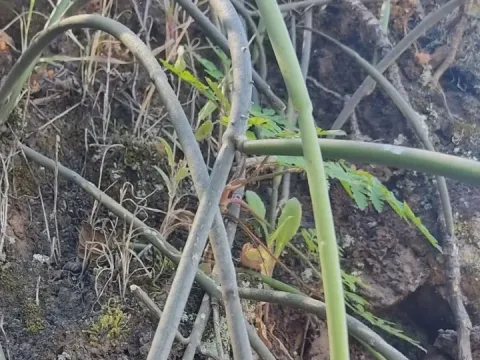
Glossonema
Glossonema
Glossonema, a member of the Apocynaceae family, is primarily known as a wild plant in arid regions, though it possesses potential for controlled cultivation.
What the section contains
Glossonema
Sowing occurs at the onset of the rainy season, which is crucial for ensuring the rapid germination of seeds in the harsh, dry environments of its natural range.
The seeds should be planted in well-warmed, loosened soil to facilitate quick root development and immediate utilization of available moisture.
Minimal depth of planting is recommended, as the small seeds require optimal positioning to emerge successfully without exhausting their energy reserves.
Success in sowing largely depends on aligning the timing with local precipitation cycles, which act as the primary biological clock for these desert species.
This crop is highly adapted to arid and semi-arid climates, thriving in areas where other traditional crops might fail due to lack of water.
The ideal substrate for Glossonema consists of sandy or rocky soils that provide excellent drainage and prevent the accumulation of moisture around the roots.
High temperatures are essential for the plant's metabolic processes, making it a robust candidate for cultivation in hot, sun-exposed regions.
Glossonema exhibits a high tolerance for poor nutrient conditions, meaning it does not require heavy fertilization to sustain healthy growth.
Adequate spacing between individual plants is necessary to reduce competition for the limited water available in the soil profile.
The yield of Glossonema is measured by the quantity and quality of its fruit, which provides a significant nutritional source in desert habitats.
Productivity is directly influenced by the amount of rainfall received during the flowering and fruit-setting stages of the plant's life cycle.
While yields can be modest compared to irrigated crops, the value of Glossonema lies in its ability to produce food in extremely marginal environments.
Proper agricultural practices, such as ensuring sufficient spacing and controlling weeds, can significantly boost the overall harvest per unit area.
Fruit quality is highly dependent on timely harvesting, ensuring that the produce is collected before it becomes fibrous or loses its nutrient content.
Major threats to Glossonema include locusts and other leaf-eating insects that can rapidly decimate plant stands in arid rangelands.
Fungal diseases are rarely a problem, except in unusual seasons with excessive and prolonged humidity, which may induce root or stem rot.
Weed infestation is a primary concern in the early stages of growth, as competing plants can easily outcompete the young, slow-growing Glossonema seedlings.
Overgrazing by domestic livestock is a significant threat, causing both direct consumption of the foliage and compaction of the soil surface.
Environmental stress, including sandstorms and extreme heat waves, may cause mechanical damage to the foliage, thereby reducing photosynthetic efficiency.
Harvesting is performed by hand, focusing on gathering fruits that have reached the appropriate stage of technical maturity for human consumption.
It is vital to monitor the plants frequently during the harvest season, as fruit maturation can be asynchronous across the plant population.
Post-harvest management involves rapid processing, such as drying, to preserve the quality and nutritional value of the fruits in the desert heat.
Using careful harvesting techniques helps to preserve the integrity of the plant, potentially allowing for continued survival and future yields.
Sorting the fruits based on their size and maturity helps in maintaining the quality of the harvested produce and improves its storage potential.