
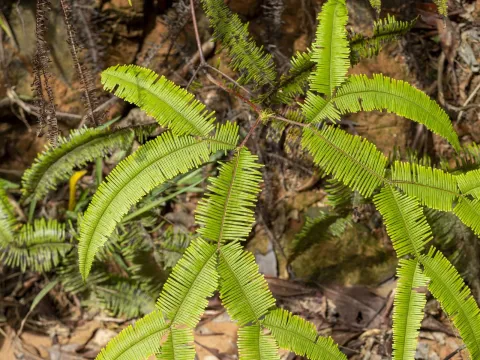
Gleichenia laevigata
Gleichenia laevigata
Gleichenia laevigata is a perennial herbaceous fern belonging to the Gleicheniaceae family. In its natural habitat, this plant is predominantly distributed throughout the tropical and subtropical regions of Southeast Asia and Australasia.
What the section contains
Gleichenia laevigata
Botanically, the plant is characterized by its distinct dichotomous frond branching, which gives it a delicate and highly decorative appearance. The rhizome is long and creeping, allowing the plant to rapidly colonize significant areas under favorable conditions.
For successful cultivation, the species requires specific climatic conditions: high air humidity, usually no less than 70-80%, and a stable temperature range between +18 and +25 degrees Celsius.
The plant is extremely sensitive to substrate composition, preferring acidic, well-drained, loose soils rich in organic matter. Waterlogging at the root zone is strictly prohibited, as it leads to rapid decay of the root system.
From a utilitarian perspective, this species is primarily viewed as an ornamental foliage crop suitable for greenhouse cultivation and botanical collections. Research is also ongoing into the potential applications of its extracts in traditional regional medicine.
The primary threats to Gleichenia during introduction are fungal diseases caused by poor soil aeration. Insufficient drainage provokes the development of various types of root rot.
Among pests, the most dangerous are spider mites and mealybugs, which multiply rapidly in conditions of high humidity and poor ventilation within indoor environments.
To prevent infestation, it is necessary to conduct regular inspections of the fronds and maintain an optimal level of air circulation around the plant at all times.
The use of copper-based fungicides can help manage pathogenic flora; however, they should be applied with caution to avoid contact with young, tender shoots.
Prevention relies on adhering to strict watering schedules and maintaining hygiene within the cultivation area, which minimizes the risks of spore dispersion for pathogens.