
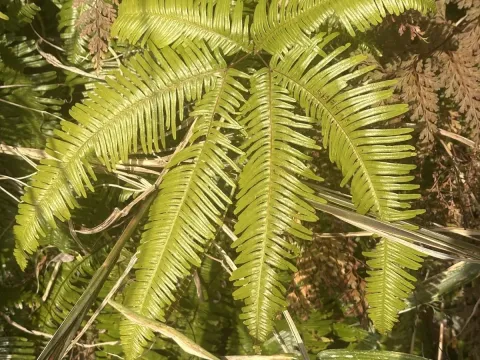
Dicranopteris
Dicranopteris
Dicranopteris is a significant genus of ferns belonging to the Gleicheniaceae family, widely distributed across tropical and subtropical regions worldwide. These plants are characterized by their unique, dichotomously branched fronds that can grow into dense, impenetrable thickets in natural habitats.
What the section contains


Dicranopteris
The morphology of Dicranopteris is defined by long, creeping rhizomes that allow for rapid vegetative spread across forest edges, disturbed land, and mountainous slopes. This growth strategy makes it a primary colonizer of degraded landscapes, often playing a role in soil stabilization.
Optimal conditions for Dicranopteris include consistent high humidity and warm temperatures, which are typical of its native tropical zones. The plants prefer acidic, well-draining soil types and generally thrive in environments where there is ample access to indirect sunlight.
Agricultural management of Dicranopteris involves controlling its expansion, as it can compete aggressively with other flora. While often considered a weed in plantations, its biomass can potentially serve as a source of mulch, aiding in soil moisture retention if processed correctly.
Historically and culturally, certain species of Dicranopteris have been utilized by indigenous communities for craft production, such as weaving traditional mats or baskets. The flexibility and durability of the stipes make them a suitable material for various artisanal handicrafts.
The plant demonstrates high resilience to typical biotic stressors. It is rarely affected by fungal pathogens or insect pests, largely due to its physiological chemistry that provides natural defense mechanisms against common tropical plant diseases.