
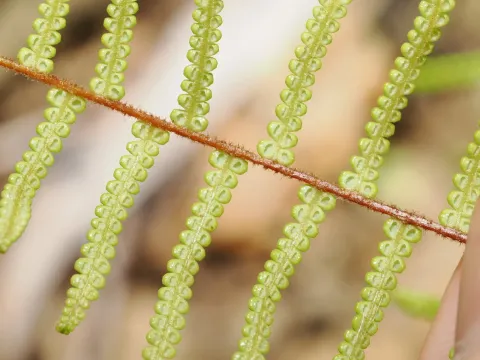
Gleichenia dicarpa
Gleichenia dicarpa
Gleichenia dicarpa, commonly known as the pouch fern, belongs to the family Gleicheniaceae. It is a distinctive fern species characterized by its intricate, dichotomously branched fronds that create dense, sprawling mats across the landscape, providing essential cover for soil and microfauna.
What the section contains
Gleichenia dicarpa
Originating from regions across Australia, New Zealand, and Southeast Asia, this plant thrives in temperate to tropical climates. Its native habitat typically includes moist, open heaths, bogs, and rocky slopes where drainage is sufficient despite high levels of annual rainfall.
The soil requirements for this species are specific: it demands acidic, low-nutrient substrates such as peat or sandy loam. In cultivation, it is crucial to mimic these conditions by providing a medium that allows for root aeration while maintaining consistent moisture levels around the rhizomes.
Climate conditions must be carefully managed to avoid extreme heat or desiccation. The plant performs best in a shaded environment where temperatures remain between 15 and 22 degrees Celsius, and ambient humidity is kept high to prevent the delicate fronds from becoming brittle and losing their characteristic texture.
Cultivation practices primarily involve careful watering with soft, non-alkaline water and minimal fertilization. While not a large-scale agricultural crop, Gleichenia dicarpa is highly valued in botanical collections and specialized landscaping projects for its unique structural beauty and resilience in damp, acidic conditions.
The primary threats to Gleichenia dicarpa include fungal infections caused by poor ventilation and waterlogged soil conditions. Root rot is a significant risk if the substrate lacks proper drainage, leading to the rapid decay of the underground rhizome system.
Pests such as scale insects and spider mites can occasionally affect the fronds, particularly in closed environments like greenhouses where humidity and temperature remain stagnant. Regular inspection of the underside of the fronds is recommended for early detection of these small infestations.
Changes in moisture levels represent a major non-biological threat. Sudden fluctuations in humidity or long periods of drought can cause terminal leaf necrosis. Unlike some hardier species, once this fern suffers from significant desiccation, recovery of the affected fronds is rarely possible.
Environmental stress, such as exposure to harsh direct sunlight or wind, often leads to chlorosis and stunted growth. The plant's inability to thrive in alkaline or mineral-rich soils also makes it susceptible to nutrient toxicity, which manifests as burnt leaf margins and inhibited root development.
Effective management against these threats involves implementing strict quarantine protocols for new specimens and maintaining a precise irrigation schedule. Utilizing preventative organic sprays can help mitigate pest issues without introducing harsh chemicals that might disturb the fern's sensitive root ecosystem.