
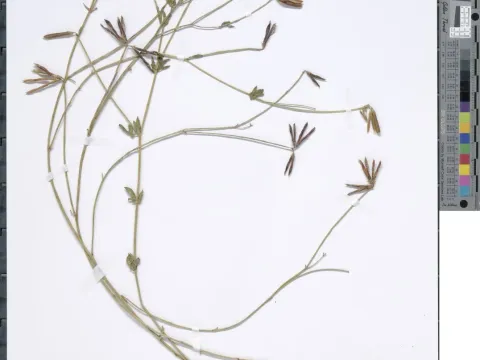
Lotus preslii
Lotus preslii
Sowing of Lotus preslii should be performed in early spring, once the soil has warmed sufficiently to ensure rapid and uniform seed germination.
What the section contains
Lotus preslii
Due to the hard seed coat typical of legumes, scarification is a mandatory treatment to break dormancy and improve the field emergence rate.
Seeds are sown at a shallow depth of approximately 1 to 2 centimeters to provide the energy balance needed for the seedling to emerge successfully.
Seeding density is adjusted based on whether the land is intended for intensive hay production or as a permanent pasture for livestock.
In regions with mild winters, autumn sowing can also be considered to leverage soil moisture and promote early spring growth.
Lotus preslii is a hardy perennial belonging to the Fabaceae family, prized for its role in sustainable nitrogen fixation in agricultural systems.
The plant adapts well to a wide range of soil types, including those with poor fertility, though it thrives best on well-structured loams.
It possesses excellent resistance to cold and can tolerate occasional waterlogging, making it highly versatile for various landscape conditions.
Full solar exposure is essential for the crop, as excessive shade will inhibit photosynthesis and result in lower biomass accumulation.
Compared to other legumes, this species maintains its nutritional quality and growth potential even during periods of moderate moisture stress.
Biomass production typically ranges from 15 to 30 tonnes per hectare, depending on the management intensity and the fertility of the field soil.
The crop is highly valued for its regenerative capacity, allowing for multiple cuttings per season without exhausting the plant's root reserves.
Forage produced from this crop is rich in essential amino acids and digestible proteins, making it an excellent feed source for ruminant livestock.
Seed yield varies significantly based on weather conditions during the pollination period and the efficacy of the harvesting procedure used.
Beyond forage value, the inclusion of Lotus preslii in a crop rotation system helps maintain soil structure and improves yields for following crops.
The crop is susceptible to various fungal pathogens such as rust and anthracnose, which are particularly prevalent in humid and stagnant air conditions.
Weevils are among the most significant insect pests, as they target the reproductive structures and can severely reduce seed quality and quantity.
Aphid outbreaks can occur during the peak growth season, leading to stunted shoots and potentially spreading viral infections throughout the field.
Effective pest management relies on maintaining field hygiene and promoting crop vigor to help the plants withstand minor infestations.
Selective use of biological controls or insecticides should be prioritized to preserve beneficial pollinator populations in and around the field.
The optimal harvest window for high-quality hay is during the early to full flowering stage, which ensures a balanced nutrient profile in the forage.
Drying procedures must be carefully managed to prevent leaf shattering, as the leaves are the most nutrient-dense part of the plant biomass.
Harvesting for seed requires precision, as the pods tend to ripen unevenly, necessitating an observant approach to determine the correct timing.
Mechanical harvesting equipment should be correctly adjusted to avoid damaging the seeds during threshing and to ensure efficient collection.
Post-harvest storage should occur in cool, dry conditions to prevent mold growth and to maintain the viability of the seeds for future sowing seasons.