
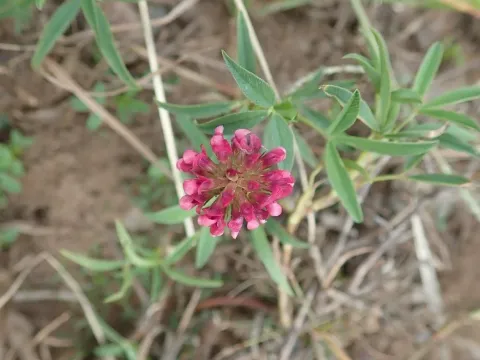
African clover
Trifolium africanum
African clover (Trifolium africanum) belongs to the Fabaceae family and is a perennial herb native to the southern regions of Africa.
What the section contains
African clover
The plant is well-adapted to savanna environments, showing significant resilience to dry seasons and varying environmental stressors.
It prefers well-drained soils and can withstand low-fertility conditions, making it a robust option for various rangeland systems.
Ample sunlight is essential for optimal growth, as the plant thrives in open spaces where it can maximize its photosynthetic activity.
The species relies on nitrogen-fixing bacteria in the root system, which helps it thrive in nutrient-poor environments by converting atmospheric nitrogen.
Sowing typically takes place at the onset of the rainy season to ensure that moisture is readily available for seed germination.
The seeds are small and should be planted at a shallow depth of approximately 1–2 centimeters to ensure successful emergence.
For pastoral use, it is often sown in mixtures with other grasses to improve the nutritional profile and longevity of the grazing area.
Seedbed preparation is crucial; the soil should be loosened to facilitate root penetration and the establishment of symbiotic relationships.
Proper timing of sowing is critical in regions with erratic rainfall patterns to avoid failure due to prolonged dry spells immediately after planting.
The biomass yield of African clover is heavily dependent on soil moisture levels and the presence of compatible rhizobia bacteria.
It demonstrates excellent regrowth potential after grazing, allowing for multiple rotations throughout the growing season.
In managed systems with moderate irrigation, the productivity of the crop increases significantly, supporting higher livestock densities.
The nitrogen-fixing capacity of the plant contributes to soil enrichment, which is a major benefit for subsequent crops in a rotation cycle.
Annual yields remain stable over several years if the crop is not overgrazed and receives adequate resting periods for recovery.
Common diseases affecting this clover include powdery mildew and root rot, which are often exacerbated by poor drainage and high humidity.
Pests such as beetles and mites can cause significant damage to the foliage, especially during the peak of the growing season.
Crop protection strategies should prioritize biological controls and integrated pest management to minimize chemical impact on the pasture.
Monitoring the field for signs of chlorosis or stunted growth helps in identifying nutrient deficiencies or pathogenic infections early on.
Good agricultural practices, such as appropriate stocking rates and rotation, are the best defense against major outbreaks of pests and diseases.
Harvesting for forage is best performed during the flowering stage, when the nutritional content, particularly protein, is at its peak.
Controlled grazing ensures that the clover is not depleted, allowing the plant to set seeds and rejuvenate for the following season.
When harvesting seeds, timing is key as the seed pods can shatter and lose contents if left to dry out completely in the field.
For hay production, rapid drying and proper storage are necessary to retain the green color and protein quality of the fodder.
Post-harvest management should focus on incorporating plant residues into the soil to maintain the nitrogen balance and soil health.