
African blackwood
Dalbergia melanoxylon
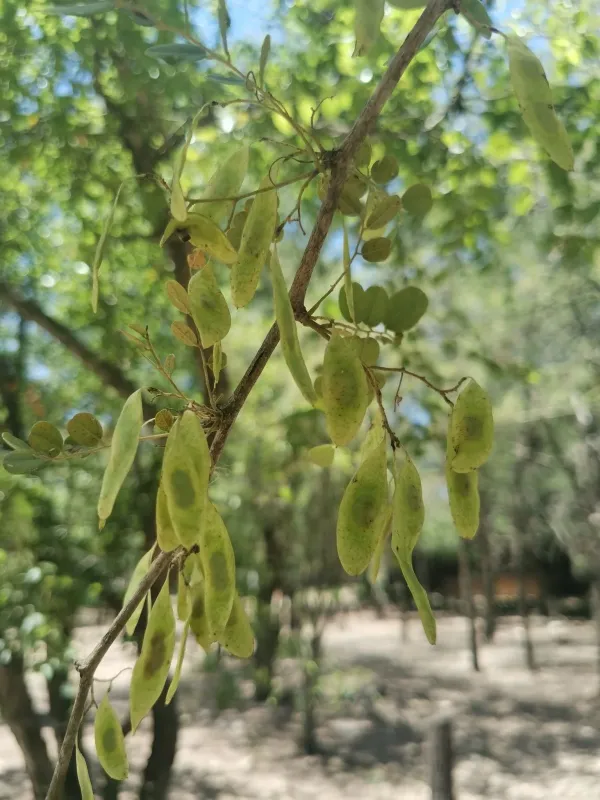
Description
Sowing dates
Propagation of African blackwood in its natural habitat occurs mainly through seeds, which exhibit low germination rates and require pre-sowing scarification.
In nurseries, vegetative propagation including stem cuttings is employed to accelerate growth, requiring the maintenance of stable substrate moisture levels.
Sowing seeds in containers is recommended at the beginning of the rainy season to ensure young seedlings have sufficient moisture for effective root establishment.
The potting medium must be well-drained and friable to prevent the risk of root rot during the initial stages of the plant's development.
The use of rooting hormones significantly improves the survival rate of seedlings during transplantation into the open field.
Growing requirements
African blackwood belongs to the Fabaceae family and is a small deciduous tree adapted to the dry tropical regions of Africa.
The species is highly light-demanding and prefers open sunny locations, as growth is significantly retarded when the tree is subjected to shade.
Optimal soil conditions include deep, well-drained sandy or loamy soils with a neutral or slightly acidic pH level.
The tree exhibits high drought tolerance, yet moderate irrigation during the dry season is necessary for intensive growth in younger plants.
Within its native range, the tree tolerates significant temperature fluctuations but is sensitive to frost, which can be lethal to young specimens.
Yield
African blackwood is an extremely slow-growing species, which results in a production cycle that can span from 50 to 100 years to reach harvest maturity.
The primary value lies in the heartwood, which develops in the center of the trunk as the tree ages, becoming exceptionally hard and dense.
Economic efficiency is derived from the high-quality ebony-like wood, which is widely utilized for musical instruments and intricate wood carvings.
Due to the long maturation period, commercial plantations of this species remain rare, with most timber still harvested from wild populations.
The fruit of the tree consists of small pods which hold no industrial value, yet serve as an essential indicator of the plant's biological growth cycle.
Main diseases and pests
Major threats to young plantations include various fungal diseases that develop in conditions of stagnant moisture in the root zone.
Pests such as wood borers and termites can cause severe damage to adult trees, compromising the integrity of the wood and reducing its market quality.
Uncontrolled logging poses a significant risk to the natural population, as the species exhibits very slow rates of natural regeneration.
Wildfires in dry savanna regions frequently destroy young saplings, necessitating the implementation of fire-prevention measures in cultivation areas.
Excessive livestock grazing exerts a negative impact on development by damaging the bark of young trees and inhibiting their vertical growth.
Harvesting
Timber harvesting is a complex technological process requiring the selective removal of only fully mature, well-developed tree specimens.
Following felling, the logs undergo a lengthy natural drying process to prevent deformation and cracking of the valuable material during subsequent processing.
The heartwood of African blackwood is recognized as one of the densest in the world, requiring specialized heavy-duty equipment for initial machining.
Adherence to legal harvesting regulations is crucial, as the species is currently threatened with extinction in many countries within its natural range.
Traditional extraction methods involve the careful separation of the valuable dark heartwood from the sapwood, which is lighter in color and less durable.